Thursday, September 1, 2011

Tapping into Hashem’s Comforting Energy

Haftorat Shoftim
Yesha’yahu 51:12 - 52:12
Printable Version

Haftarat Shoftim, the fourth of the seven “haftarot of consolation” read between Tisha B’Av and Rosh Hashana, opens with G‑d’s promise: “I, myself am the One that comforts you!” (Yesha’yahu 51:12). Whatever hardship we have experienced in our personal life and as a people, Hashem’s comforting energy is always near, if only we tap into it. This haftorah really strengthened my emunah, I hope reading this will strengthen your emunah too!

The Haftorah’s Connection to the Parashah – Fear No-One but Hashem!
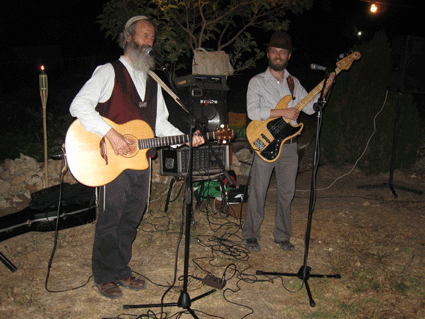
Rebbetzin Chana Bracha at this year's Grape Festival
The theme of this week’s Torah reading centers around the fact that Israel has many judges, yet, there is only one true Judge: G-d. The role of the judge is to bring Israel to true fear of G-d, by facilitating the keeping of His precepts. True fear of G-d results from removing fear of anything but Hashem. The beginning of the haftorah teaches us that the only One to fear is Hashem, He is our only true comfort, and the source of our life. “Who are you that you should fear Man who must die? ...have you forgotten Hashem your Creator, that stretched forth the heavens, and laid the foundations of the earth, and are you afraid continually every day because of the fury of the oppressor…?” (Yesha’yahu 51:12-13). Malbim distinguishes between the word יראה, yirah (awe) and the word פחד, pachad (afraid). The former is a fear of something external, whereas the latter is a continual state of internal fright, without being aware of the source of one’s fear.

Internal and External Fear
Interestingly, the first word for fear in our haftorah is written in the feminine form וַתִּירְאִי from יראה (awe), whereas the word for being afraid continually is written in the masculine form וַתְּפַחֵד from פחד (afraid). I was thinking of how external, occasional fear could possibly be more feminine than the constant fright of an unknown source. I came up with the possibility that women have greater innate emunah (faith), and therefore, are less prone to constant inner fright. Although women are stereotyped to be more fearful than men, it could be that actually women are more aware of their fears, whereas men suffer a deep unconscious fear. Women are more involved in self-development and awareness. By identifying possible fears and traumas, these fears are externalized, as a step towards removing them. I would like to call on my readers to give your opinion regarding the fears of men and women respectively.

The Garments of Jerusalem
“Wake up! Wake up! Dress up in your strength, Tzion! Put on your beautiful garments Jerusalem the Holy City… 2. Shake yourselves from the dust, arise, and sit down, Jerusalem; free yourself from the bands of your neck, captive daughter of Tzion” (Yesha’yahu 52:1-2). Part of the Kabbalat Shabbat song Lecha Dodi is taken from these two verses of our haftorah: הִתְנַעֲרִי מֵעָפָר קוּמִי. לִבְשִׁי בִּגְדֵי תִפְאַרְתֵּךְ עַמִּי –”Shake off yourselves from the dust, arise! Dress up in the garments of the splendor of my people!” We welcome the Shechina Friday night, by arousing ourselves and the entire Jewish people to shake off the dust of the mundane reality of the week, in order that we, our community, and the whole world will be able to get dressed up in the spiritual Shabbat clothes of splendor. Just as we prepare for Shabbat every Friday, now, during the messianic era, we need to prepare for the great celebration of Mashiach, when all reality will become Shabbat. It reminds me of a giant wedding hall being cleaned spotless and decorated for a very special wedding. Just as it is mainly the woman of the home who is involved in the Shabbat preparations, women have the key role in preparing for the world’s cosmic Shabbat, through self-development and spiritual healing. In order to become ready to dress up in our Neshama yetera – higher Shabbat/redemption level of consciousness, we must remove any blockages from our soul. We need to ask ourselves, “What is the dust we would like to shake off ourselves?” Which dust in my life clogs up my vessel from being a pure channel to receive Hashem’s presence? Which stains of dust on the windows of my soul prevent me from perceiving Hashem with full consciousness and clarity? As we sweep and mop on Friday afternoons, let us work mentally on shaking off any fear, stress, anger, grudge and residue of sadness that blocks our soul from fully shining.

The Inner and Outer Garments of Israel
Getting ready for the banquet of Mashiach entails two stages, as reflected in our Shabbat preparation. In honor of Shabbat, we first take a shower and then dress up in our Shabbat clothes. Similarly, in the messianic era, only after having shaken off our spiritual dust, are we ready to wear our garments of holiness. We need to heal our childhood wounds and remove negative emotions and midot (character-traits), in order to illuminate the world with the light of our soul. Malbim distinguishes between the inner and outer garments of Jerusalem. “Tzion” referring to the City of David needs to dress up in her inner strength: The Temple, the Sanhedrin and Kingdom. However, “Yerushalayim,” which refers to the general city, will wear the external garments of wealth and success. Tzion and Yerushalayim are the reflections of the inner and outer reality of each individual Jew. Thoughts, speech and action are the garments of our soul. By perfecting these inner garments, we become a pure channel for Hashem’s shefa (abundance) to receive the outer garments of wealth and success. Our spiritual workout consists of developing a positive outlook – giving the benefit of the doubt, really working on cleaning our speech from negativity and gossip, and increasing acts and kindness. To the extent that we have perfected the inner garments of actions, speech and thoughts, we will be able to dress up in the outer garments of blessings and prosperity which Hashem constantly causes to flow down to us. When our outer garments match our inner garments, our unity with Hashem can never again be broken.

Everlasting Return
The haftorah concludes with the promise that the Jewish people will never have to leave Jerusalem in a rush, because Hashem will return to Tzion and protect us both from the front and the rear. (Ibid. 52:11-12) Rabbi Dovid Siegel explains this guarantee Hashem is giving Israel through a parable. A king became enraged at his queen, and banished her from the palace. After some period of time, he reconsidered his actions and informed her of his intentions to remarry her. She consented on the condition that he doubles the amount of her ketubah (the husband’s financial responsibilities to his wife). This is a parable for the relationship between Hashem and the Jewish people. Our initial relationship with Hashem was established when accepting the Torah on Mount Sinai. At that time, Hashem revealed Himself to His nation and proclaimed, “I am your Hashem.” Afterwards, the Jewish people’s behavior was so inexcusable that Hashem rejected us and exiled us from Tzion. Yet, at the time of redemption, Hashem desires to reunite with Israel. In spite of our failure in the previous relationship, Hashem promises to increase His revelations which will guarantee an everlasting relationship with His beloved people (Yalkut Shimoni 474).

Perceiving Hashem with Renewed Clarity
At the close of the haftorah, Hashem conveys his incredible new commitment to us: “How beautiful upon the mountains are the feet of him that brings good tidings of peace; proclaiming goodness and salvation, saying to Tzion, your G-d has come to reign! The voice of the on-lookers is heard, they raise their voice in unison and singing, for they shall see eye to eye, Hashem returning to Tzion” (Yesha’yahu 52:7-8). Our Sages explain that until this point it was virtually impossible to behold Hashem’s presence with perfect clarity. However, in the era of Mashiach, all constraints will be removed. The Ba’al Haturim on his commentary to Bemidbar 14:14 echoes this concept and contrasts Israel’s experience at Mt. Sinai to that of the Messianic era. When Hashem began this relationship and proclaimed, “I am your Hashem,” the revelation was so overwhelming that we were incapable of maintaining our consciousness throughout the experience. In fact, our Sages (Babylonian Talmud, Shabbat 88b) reveal that we were miraculously revived after each of the commandments. However, in the era of Mashiach, the Jewish people’s spiritual capacity will be greatly increased and we will be capable of viewing Hashem with total clarity. This is the meaning of the words of this week’s haftorah: “For they shall see eye to eye, Hashem returning to Tzion.” Hashem’s return will be so tangible that we will merit to sense His presence with perfect clarity, and so to speak, look Hashem directly in the eye.

Double-Sided Eternal Relationship
It was our spiritual dust that prevented us from fully absorbing Hashem’s revelation even at Mount Sinai when He proclaimed, “ אָנֹכִי – I am your Hashem” (Shemot 20:2). However, the suffering of exile together with our spiritual Shabbat cleaning prepares us to absorb the new revelations in their fullest form. Therefore, during the Messianic era, the Jewish people will be perfectly prepared to receive Hashem’s presence with complete consciousness. No longer will our relationship with Hashem be one-sided – אָנֹכִי, as during Matan Torah. Our haftorah opens with a double expression of Hashem’s name – אָנֹכִי אָנֹכִי. With this expression, “I” and “Myself” Hashem informs us that the upcoming relationship will be double sided. It reflects both Hashem’s perfect revelation, as well as the Jewish people’s total reception. The renewed revelations will establish an everlasting bond between Hashem and His people. Hashem’s “eye” – the degree of His revelation, and our “eye” – our perception of Hashem’s presence, will finally match. We will then have the capacity to enjoy the ultimate everlasting relationship with our true Partner and Father above!

Wednesday, August 24, 2011

The Stones of the Holy Tribes

Haftorat Re’eh
Yesha’yahu 54:11-55:5
This week’s haftorah is the third of a series of seven “haftarot of Consolation,” which began on the Shabbat following Tisha b’Av and continue until Rosh Hashanah. I found the metaphor about the different stones that will build Yerushalayim very fascinating. Malbim explains how these stones represent the holy tribes of Israel. In this writing, I explain how the attributes of the assorted crystals, as explained in new age science, fit perfectly with Malbim’s commentary.

The Mother Tzion – Swaying in the Wind
Lunch at the Creative Ulpan from the Bible
Hashem comforts the “afflicted and storm-tossed” Yerushalayim. “O you afflicted tempestuous one, who are not comforted, behold I will set your stones with garnet, and I will lay your foundations with sapphires” (Yesha’yahu 54:11). Although the dispersed children of Israel are being ingathered from the Diaspora, Yerushalayim is still like a poor woman shaking in the stormy wind writes Metzudat David. This metaphor seems to perfectly describe the political situation in Israel today. Jerusalem is being pulled in different directions, by nations fighting for the right to her as their capital. For several years Israel has been forced by the nations to apply settlement freeze to Jerusalem, especially in East-Jerusalem. Therefore, there is a severe housing crisis in Jerusalem. While young couples are struggling to find affordable apartments in Jerusalem, our mother – Tzion – is helplessly striving to provide shelter for her beloved children. Despite the stormy winds from both North and East, threatening to break the frail mother, Hashem comforts Jerusalem, assuring her that in the end she will be rebuilt. Her foundation, walls and ground will be laid with precious stones. Any weapon pointed against her will eventually fail.

Her Foundation is the Kingdom of Torah
Malbim explains, that following the beginning of chapter 54 in Yesha’yahu, about the barren woman who became blessed with children – alluding to the ingathering of the exiles, the prophet now describes how Tzion is still not rebuilt. Although Tzion is no longer barren, as the dispersed Jews are being ingathered and the land filled with her children from the Diaspora, Yerushalayim is still in ruins. However, Hashem renews the hope of Tzion “…behold I will set your stones with garnet…” Garnet is the stone upon which the foundation of Tzion will lay, while the foundation itself will be of sapphire. The garnet, the stone of Yehuda, is the sign of Kingdom, and the sapphire, the stone of Yissaschar, is the sign of wisdom and Torah. These two – the crown of kingdom and the crown of Torah – will become the foundation of the Temple.

The Secret Attributes of Sapphire and Garnet
In The Secrets of Crystals, by Shani Toder, I found that the sapphire (סַפִּיר) creates balance, wisdom and stability. The blue sapphire, symbolizing the celestial, improves ones mood, and relieves pressure. It is good for communication. It lightens situations of deep hopelessness and increases intuition. White sapphire strengthens spiritual wisdom. Wearing a sapphire helps us talk from within with higher inner wisdom. These attributes ascribed to the sapphire fit perfectly with Yissashar who represents the wisdom of the Torah. The garnet (נוֹפֶךְ) strengthens self-confidence and is known as the stone of commitment because it strengthens determination and devotion to a cause or goal, to other people and to self obligation. This fits perfectly with the character-trait of Yehuda and kingdom. The garnet affects the lowest vertebra, the foundation of the body, and the nerves along the spine. This stone, which resembles blood by its color, strengthens, purifies and provides renewed energy to the body, especially to the blood system. During the transition between exile and redemption, we need purification and renewed energy. Therefore, it makes perfect sense that the garnet and what it represents will serve as the foundation of the building of Tzion.

Her Children Support Her with Stones of Strength
“I will make your windows of onyx and your gates of beryl stones, and all your borders of desirable stones (Yesha’yahu 54:12). Malbim continues to elucidate the metaphor about the different stones that build up Yerushalayim. According to Chazal (our Sages), the כַּדְכֹד (Cadchod) is the onyx – Yosef’s stone, which is the sign of success and wealth. The windows, called in our verse שִׁמְשֹׁתַיִךְ (Shimshotayich) literally “your suns,” will be made from onyx. This symbolizes that Hashem will provide us with all kinds of sun-grown produce bringing wealth and success. According to The Secrets of Crystals, the onyx eases fears, pressure and depression, and is therefore recommended during times of pain and sorrow. This fits perfectly with “your windows of onyx,” as it is known that sufficient sunlight is one of the main keys to preserve happiness. Several studies have proven, that people living in dark basement apartments, are predisposed to depression. Onyx is also the stone that protects against negative energy. It, therefore, makes sense that our windows, prone to outside influence, are made of the protective onyx stone. Malbim explains that our gates will be made out of beryl, which is Levi’s stone. These are the gates of Hashem, which the tzaddikim (righteous) enter. The beryl is a spiritual, physical, and mental healer. It is good to wear while working with others. Just like the Levites were involved with the holy worship of the heart, and played music in the Temple, the beryl increases the ability of self-expression and strengthens the heart. According to Malbim, “…all your borders will be desirable stones” refers to the stones of the rest of the tribes, which will be established in the complete building of Israel. This symbolizes that all the tribes will be unified in the Land, and no longer divided into two kingdoms.

Happy is the Mother Engraved with the Peace of her Children
All your children shall be students of Hashem, and your children’s peace shall increase (Yesha’yahu 54:13). Living according to the Torah brings peace to Israel. It is the saddest thing when adult siblings don’t get along. The Torah naturally guides us to get along with our siblings, by teaching us never to gossip, bear a grudge or take revenge. More than her kids being physically close, it is the peace and love between the children that gladdens their mother. Baruch Hashem, my two sisters and I continually make our mother happy and honor her with our closeness. Sprouting forth from the same stem, we have a piece of each-other within us wherever we go. Although there are more than fourteen years between my oldest son and his brother, their love and care for each other warms my heart. There is nothing that makes me happier than when I see my two sons studying Torah together. This is when I joyfully experience the greatest and deepest bond between them. The more we learn Torah, the more we refine our character and ability to love each other in the deepest way. The prophet comforts our mother, Tzion that her children – all of Israel – will come to Torah, and thereby find everlasting peace with one another. Each of her children contributes the necessary qualities for the greater, unified good. With the purification, self-confidence and devotion of Yehuda; Yissaschar’s wisdom, balance stability and communication; Levi’s heartfelt self-expression; the success and protection of Yosef; and all the qualities of the rest of the tribes, we will build the renewed reality of peace and redemption. Once we establish true peace among ourselves, despite our differences, then the prophecy: “You shall not fear, and from terror; then it shall not come near you” (Ibid. 14) will be fulfilled. 
May we all live to experience the end of terror in our Promised Land!

Wednesday, August 17, 2011

Hashem - “He” or “She” or both?

Haftorat Ekev
Yesha’yahu 49:14-51:3
Printable Version

In the Prophesies of Redemption, Hashem is often described through the metaphor of a wife and mother. In this commentary, I discuss the connection between this feminine imagery and redemption, and the difference between the masculine and feminine aspect of Hashem, and whether we should refer to Hashem as “He” or “She” or both?

Innate Maternal Mercy
Rebbetzin Chana Bracha with Sara Malka Laderman
This week’s haftorah is the second in the series of seven “haftorot of Consolation.” The children of Israel express their concern that G‑d has abandoned them in the long-winding exile. G‑d reassures Israel that it is not so, comparing His love and mercy for His people to that of a mother for her children. “Shall a woman forget her sucking child, from having mercy on the child of her womb? These too shall forget, but I will not forget you” (Yesha’yahu 49:15). In the comparison of Hashem to a nursing mother, His mercy on the Jewish people is even greater than the mercy of a mother on her suckling children. A mother has the deepest connection with her nursing infant, to whom she is tied, as with an invisible umbilical cord. The cries of her baby pull her heartstrings so strongly, that it can even bring about the flowing of her milk. The moment her baby is born, a young woman instantly turns from being a carefree, self-centered teenager, to a responsible caring mother. The needs of her baby take precedence over all her personal needs. As her womb expands and opens to give birth, her motherly mercy is born as well. This is why the Hebrew word for “womb” – “rechem” shares the same root as “mercy” – “rachamim.”

Out of Tune with Innate Maternal Mercy – Access Hashem’s Life-giving Shechina
Unfortunately, there are exceptional cases, where the mother is out of tune with her innate maternal mercy, as in the quote above from Yeshaya’hu: “…These too shall forget.”– In my practice of spiritual healing, I have come across numerous women with abusive, controlling critical mothers who must have forgotten their natural compassion for their children. It takes much spiritual healing and inner child work to mend the lack of self-esteem and neurosis stemming from lack of maternal mercy. “…But I will not forget you” says Hashem. No matter how much abuse we have experienced, we can still access Hashem’s life-giving Shechina within us and emerge from the darkness. Hashem will never forsake us, neither on an individual level nor as a nation. Hashem will eventually redeem and heal us completely, revealing His Shechina within each of his children and restoring His chosen people securely to their Holy Land.

Is G-d “She” or “He”?
Many people have expressed difficulty when I call G-d: “He.” Some suggest that I use “He or She.” I find this too convoluted, as I always try to express ideas in the most concise way possible. We all know that G-d is beyond any comparison to human form or gender. Although the Torah unequivocally tells us that G-d is beyond form, it uses anthropomorphic metaphors, such as G-d’s strong hand, His watchful eyes etc., because the human mind is incapable of grasping purely esoteric concepts, without concrete images. Likewise, the Zohar describes how G-d’s unity is expressed in male and female energies, consistently with the humanity, created in His image. Male and female genders are a living metaphor for the two ways that G-d makes His presence known. Rebbetzin Tziporah Heller writes beautifully how the Torah uses “He” when describing the external, revealed Divine interventions, comparably to the male external organs, and “She” when describing the internal, hidden spark of Divinity that gives life to every creation, and corresponds to the internal feminine genitals. For example, when G-d communicates by giving us the Torah, and when He performs open miracles, obvious to even the most cynical eye, such as the splitting of the Reed Sea, then G-d is called “He” or “Holy One Blessed Be He.” On the other hand, the Feminine aspect of G-d, the Shechina, describes the permeating light of G-d’s inner presence, hidden within each of us. Due to the internal nature of the feminine aspect of G-d, “She” cannot be expressed through the external nature of speech. This is why, although G-d is equally masculine and feminine, I address G-d as “He”, unless I’m referring specifically to the Shechina.

Hashem our Mother
I believe that the image of Hashem as a merciful mother in our haftorah reflects the inner dimension of Torah and mitzvoth, which is revealed during the messianic era and redemption from exile described by the haftorah. We learn from Tanya, that during this time, “The involvement in Torah and mitzvot will be through the inner teachings of Torah by fulfilling mitzvot with supreme devotions…the inner meaning to the mitzvot and their hidden reasons” (Tanya, Igeret HaKodesh 26). Most references to G-d, during the redemptive process are therefore expressed in feminine imagery, as the Shechina will then emerge from Her hiding and ultimately permeate the whole world with Her radiance.

Shaping the Rock of Sarah
Our haftorah culminates with a call to remember from where we came, and the rock from which we are hewn – Avraham and Sarah – our male and female role-models, which have molded the existence of the Jewish people. “Look to the rock from where you are hewn, and to the hole of the hollow from which you were dug out. Look to Avraham your father, and to Sarah that bore you.” (Yesha’yahu 51:1). According to Rashi, Avraham is compared to the rock that protrudes outwards, whereas Sarah, is compared to the inner hollow from where we were carved. While Avraham is the raw material of the rock, Sarah shapes the rock by removing the undesirable parts. She ensured that Yishmael would be separated from Yitzchak, in order to allow the Shechina to be fully revealed. We, women, continue the work of Sarah. By removing negativity, and protecting the men in our lives from harmful influence, we carry on the carving, until the inner core of the rock is revealed. In this way, we fulfill our job as Jewish women, to refine and remove anything that separates the Shechina from being fully revealed in the world.

Hope after Despair
Consolation and hope is the main topic of our haftorah. Even when all seems lost, there is still hope for renewal. Rav Tzaddok Hakohen of Lublin explains that Avraham and Sarah were the first to reveal the concept of never giving up on anything. The Jewish nation emerged only after Hashem blessed Sarah to conceive a child, when all hope was lost. Therefore, the essence of Judaism is to have emuna and never give up. “Ben David will not come until everyone has given up on redemption (Sandhedrin 97a). Even after giving up, there is still hope (Divrei Sofrim 16). It is time to believe that the light of the Shechina is about to shine forth in the world, and reveal the inner truth to all. Just as the merciful mother never gives up hope for the physical and spiritual survival of her children, so will Hashem never give up on us. “So says Hashem, G-d, See, I will lift my hand to the Gentiles, I raise My banner to the peoples. They will bring your sons in their arms and carry your daughters on their shoulders” (Yesha’yahu 49:22). Let us hold on tight, without being afraid of the ride!

Thursday, August 11, 2011

Tub’Av: Rectifying our Inner Lights

The Bat Mitzvah Midreshet B’erot Bat Ayin TubAv 2009
Concert with Chaim Dovid Serasic
Mazal tov to Midreshet B’erot Bat Ayin, born fifteen, years ago on Tub’Av, at the time of celebrating the rise of the feminine! Our Midrasha is in the forefront of Jewish femininity, by building the malchut (kingdom) of the Jewish home and Land. Returning the Shechina – the Feminine Indwelling Presence to the Land, does not just happen through academic study, but rather, by getting deeply in tune with the inner world of the spirit of Israel, while developing our feminine insight and intuition. Only in the Land of Israel is it possible to link the spiritual and the material through outward expression of our creative inner potential. Following a short commentary on the haftorah I share Torah insights about the hidden feminine holiday of Tub’Av and its connection to the vision of Midreshet B’erot Bat Ayin. I wish all of you a joyous celebration and rectification of the Inner Feminine Lights!

Please donate to Creative Torah Learning for Women on the Land in honor of Tub’Av and the birthday of Midreshet B’erot Bat Ayin.

Haftorat Vaetchanan
Yeshayahu 40:1-26
Haftorah of Consolation
This week’s haftorah is the first of the seven “Haftarot of Consolation,” that we read on the Shabbatot (Shabbats) between Tisha b’Av and Rosh Hashanah. This section from Yesha’yahu begins with G-d’s refrain to the prophets: “Comfort, oh comfort My people, says your G-d. Speak comfortingly to Yerushalayim, and cry to her, that her period of exile has been fulfilled and that her sins have been forgiven...” (Yeshaya’hu 40:1). Yesha’yahu’s prophecy describes some of the miraculous events that we now see unfolding during the beginning of the Messianic era, such as the return of the exiles to Yerushalayim. We still await the complete solace for Israel described in the haftorah together with the revelation of G‑d’s glory and power.

The Connection Between the Haftorah and the Torah Reading
While the consolation in this week’s haftorah is appropriate for the Shabbat after Tisha b’Av, it also has a hidden connection to Parashat Va’etchanan which includes the Shema prayer. We have a tradition that the word Shema – שְׁמַע is an acronym for the beginning of the last verse of our haftorah. The first letters of the Hebrew words “Lift up your eyes on high…” (Yesha’yahu 40:26), spell out the word Shema – שְׁמַע. The phrase in Hebrew reads “שְׂאוּ מָרוֹם עֵינֵיכֶם” (“Se’u Marom Eineichem”). The continuation of the verse of the haftorah is “…and see who created all these…” This goes together with the lesson of the Shema prayer – to understand that Hashem is the One and only Creator. When we look around the world we live in, some things make sense to us and some don’t. We see so much violence and destruction. However, if we look to Heaven and understand that “Hashem our G-d is One,” who causes all events to happen, their higher purpose becomes easier to understand. The haftarah tells us to lift our eyes to see the same principle that we are told to hear in the parashah. We need to focus both our faculties of hearing and seeing on the oneness of Hashem. When we understand that He is the only power from beginning to end, then our questions are silenced.

A Time for Forgiveness and Consolation
Rabbi Shimon Ben Gamliel stated, “Israel had no holidays as joyous as Tu b’Av and Yom Kippur, when the daughters of Jerusalem would go out and dance in the vineyards” (Mishnah Ta’anit 4:8). What is so joyous about Tub’Av and Yom Kippur, that they are considered the happiest days of the year? There is nothing more joyous than when we have worked hard to earn our reward. After the nine days of Av which symbolize all the suffering and toil of exile, the prophet promises us forgiveness and redemption through the hidden holiday of Tub’Av. On Tub’Av the rise of the feminine “Arousal from Below” begins. This holiday opens the period when we work hard to deserve Hashem’s forgiveness and reward. The period culminates on Yom Kippur, when we purify ourselves to the highest degree through fasting and prayer. On both days we receive complete forgiveness from our current and past misbehavior, going all the way back to the sin of the spies (Tub’Av) and the sin of the Golden Calf (Yom Kippur). On Tub’Av, we celebrate, after the nine difficult days, when we worked on submitting our heart to Hashem through mourning the destruction of our Holiness, fasting and lamenting on Tishab’Av with ashes. Our mourning and suffering has cleansed us from everything that separates us from un-holiness and the Land of Israel. Our suffering atones for the sin of the spies, who were afraid to conquer the Land of Israel. On both of these holy days, we receive the greatest gift of atonement. Therefore: “No days were as festive to Israel as the 15th of Av and Yom Kippur.”

Women Build the Malchut on the Land
Tub’Av is the time when the malchut (kingdom) of the Shechina (Feminine Indwelling Presence) begins to be revealed. This corresponds to the “Arousal from Below” and our Inner Lights, as opposed to the masculine “Arousal from Above” and our Surrounding Lights. The feminine malchut corresponds to Awe of Heaven and begins the period preparing for the High Holidays (in Hebrew Yamim Noraim – Days of Awe) when we crown Hashem King. Likewise the Land of Israel is also known to be the aspect of malchut. Therefore, women who are also the embodiment of malchut have a special connection with the Land.

Dancing in White Dresses Symbolize Purification of the Vessels for Malchut
We prepare our vessels to hold the Inner Lights by crowning Hashem “King of the whole Land” with our entire being: Head, heart and liver. (In Hebrew the initials of these three organs Moach,-Brain, Lev- Heart, Caved- Liver spell out the word King –melech). This entails working on ourselves in order to integrate the Torah into every fiber of our being. This is a greater level than “Surrounding Lights,” which correspond, for example, to hearing an inspiring lecture without being able to give it over. Rabbi Refael Luria explains that the daughters go out in white dresses on Tub’Av, to indicate the beginning of the period for preparing the “Inner Lights” – the vessels and the garments, which must be white and pure, worthy for the Divine to dwelling. The circle dance in the vineyards creates the vessel for the Inner Lights, to become a vineyard of G-d. The vineyard also alludes to the Inner Lights, as the vine is found inside of the grapes.

Tub’Av: Tikun (Rectification) of the Inner Lights through Creative Expression
According to the religious practice of modesty (tzniut), today it is unacceptable for young women go out to dance in the vineyards, while young men watch, and choose whoever pleases them most. Therefore, our work is to tune into the inner quality of the women’s circle dance by rectifying our Inner Lights by connecting with the land in tree-planting and praising Hashem through creative expression. Expressing our creative potential is the feminine mode of serving Hashem which will ultimately herald the geula. It requires getting in touch with the inner spark of the Shechina buried deeply within each of us and giving birth to it through our personal artistic expression in music, art, poetry, dance etc. Through expressing our creativity we integrate our Torah and become a channel for Hashem’s Shechina to shine through us.

The Inner Lights of Tub’Av & Midreshet B’erot Bat Ayin
At Midreshet B’erot Bat Ayin, women work together side by side, day after day, sharing insights, dreams and visions. We develop our intuitive femininity, learning from mothers, caretakers, visionaries, peacekeepers, teachers, guides, healers, and mediators. We strive to become wise and loving women knowing that our fundamental task is to maintain harmony and balance within our homes, community and the larger world. Through rectification of our Inner Lights we can engender spiritual transformation, and radiate the subtle power of “The honor of the King’s daughter is within” (Tehillim 45:14). “In the merit of the righteous women” and with G-d’s help, we will merit the building of the Divine Home and the complete redemption speedily!

Tuesday, August 2, 2011

The Shabbat of Vision

Haftorat Devarim
Yesha’yahu 1-1:1-27
Printable version

I feel that Yesha’ahu is speaking straight to us today, to feel remorse for the ruin of our people, and to strengthen our vision in a future of a united thriving Torah community infused with justice, morality and righteousness in the heart of our Holy Land. 

A Vision of the Ruin of our People
Rosh Chodesh Av – Yesha’yahu had a vision:
View from Midreshet B'erot towards the Mediterranean Sea


“The vision of Isaiah the son of Amoz, which he saw concerning Yehudah and Yerushalayimm, in the days of Uzziahu, Yotam, Achaz, [and] Chezkiyahu, kings of Judah” (Yesha’yahu 1:1). On Rosh Chodesh Av in the sadness of our time, I cry: Yesha’yahu had a vision concerning Gush Katif, and Jerusalem in the days of Rice and Baker, Bibi, and the dormant dog. “Your land is desolate; your cities burnt with fire. As for your land, strangers devour it, in your presence, and it is desolate, as turned over to strangers” (Yesha’yahu 1:7). “Your land is desolate” –The thriving greenhouses, farms, schools, community centers, synagogues and homes of the Gush Katif communities were made into dust and sand by no other than Israeli forces. 9,000 Jews from Gush Katif and northern Shomron were expelled by their brothers. Their homes, communities and trees were uprooted. “Your cities burnt with fire” – Their holy synagogues were burnt down to ashes by life hating Arabs. “As for your land, strangers devour it in your presence” – It was taken over by Hamas to become a stronghold for firing Kassam rockets at the face of Israel. Thousands of rockets began bombarding Israeli towns. Six years after, with my Land in tears, there has still not been “A solution for every settler,” as promised. I cry for my disillusioned sisters and brothers. “From the sole of the foot until the head there is no soundness, but wounds and bruises and putrefying sores; they have not sprinkled, neither have they been bandaged, nor softened with oil” (Yesha’yahu 1:6). Only 9 percent of the expelled families have completed construction on their permanent homes. Some 85 percent continue to live in temporary makeshift homes, while they wait for their sites to be prepared. “The daughter of Tzion is left like a hut in a vineyard… (Yesha’yahu 1:8). How long will the building freeze last? How long will they poison the daughters of Tzion with anger, spite, violence, immodesty and hatred?

How did the Daughter of Tzion Sink into Such Deep Mud?
I cry with Yesha’yahu about how low the daughter of Tzion has fallen. Echoed in the Book of Lamentation, “Eicha?”(How?), Yesha’yahu laments the downfall of the Jewish woman. How can it be, that from the people destined to be “A light to the Nations” (Yesha’yahu 42:6), women have succumbed to the worst kind of immorality harlotry and murder? “How has the faithful city become a harlot! Justice and righteousness would lodge in it, but now murderers” (Yesha’yahu 1:21). Six years after, with my Land in tears, where were the outcries, when in June 2010, Tali Atar z”l, 34, was brutally murdered by another woman? Is there anything more unbelievably tragic than an eight month pregnant single mother being stabbed to death by her downstairs neighbor, because she spilled coffee on her laundry? The woman pulled out a knife, striking in the abdomen, neck and chest so severely, that the doctors in Kaplan Hospital could save neither her life nor the life of her unborn baby. Can you imagine a more horrific vision than that of Tali’s three children, 12, 10 and 6 who heard her screams and witnessed the horror of seeing their mother lying in a pool of blood fighting for her life? Who cried in the city of Ashdod, so close to the tragic expulsion six years ago, where Tali Atar died of her massive stab wounds? Police admit that they are astounded that a mother took the life of another mother, one who was eight months pregnant, over a spilled cup of coffee. During the ‘70s, ‘80s & up to the mid-’90s violence was a rarity back then in Israel. Murders were extremely rare, and if one occurred, it got the attention of the whole country for a long time. I remember even as a teenager, violence of the current type was unheard of. Murder and attempted murder in Israel rose from 107 and 90 in 1990 to 134 and 312 in 2007. That means that attempted murder rose 300% while the rate of murder rose “only” 30%. Oy! What has become of us?

From the Depth of the Abyss Hashem Calls Us Back
Once we have hit rock bottom, there is no other way than return. Women are awakening from the abyss of drugs, immodesty, and abuse, returning to the faith of our mothers – every descent leads to a greater ascent. Rabbi Yochanan said, “The son of David comes only to a generation who is either entirely pure or entirely guilty” (Babylonian Talmud, Sanhedrin 98a). Within Yesha’yahu’s horrendous vision, the spark of the greatest hope is kindled. “Come now, and let us reason together, says Hashem, though your sins be like scarlet, they shall be white as snow…” (Yesha’yahu 1:18). Even when the behavior of the Jewish people is truly abhorrent, it only represents the external layers of our heart. From within our inner dimension, our true source of existence, Hashem calls us to return and be cleansed and brightened like glistening snowflakes.

Even when the daughter of Tzion has fallen into the most inconceivable immoral behavior, Hashem – the heart and pulse of the Jewish nation – remains connected to His people. Even when our actions are totally corrupt, Hashem calls us back, and reveals (draws out) the purity of our inner dimension.

Shabbat Chazon – Visualizing our Temple Within
This Shabbat is called Shabbat Chazon – “The Shabbat of Vision.” According to Rabbi Levi Yitzchak of Berditchev, every year, on the Shabbat prior to Tish’ah B’Av, we are shown a vision of our world as a Divine home – a place where all G-d’s creatures will experience His presence. This vision evokes a profound response in us, even if we are not consciously aware of the cause of our sudden inspiration. Even if we do not see, our souls do see. I’d like to encourage all of us to take advantage of this special Shabbat to consciously visualize our own Temple within. I’d like to call on all our readers to take a few minutes, any time during this upcoming Shabbat, to close your eyes and imagine the splendor of the Feminine In-dwelling Presence returning to the world. What colors do you see? What landscapes, people, flowers, sparks of light and shapes comes to mind? What is your vision for yourself, how do you imagine yourself growing in righteous accomplishment? “Tzion shall be redeemed through justice and her returners through tzedaka (righteousness/charity)” (Yesha’yahu 1:27).

Take this moment now to support (click here) the vision of the return of the daughters of Tzion to the Torah and the Land. From the huts of the vineyards of Bat Ayin, the voice of Torah is heard from the daughters of Tzion. In the wake of the daughters of Tzelafchad we will build up the ruins of our Land. We will infuse it with the sprouts of love, devotion, and courage!

Wednesday, July 27, 2011

The Way to Redemption Paved by the Jewish Family

Haftorat Masei (Matot/Masei)
Yirmeyahu 2:4 - 2:28
I have come to treasure my family more and more over the years, and do the best I can to give each member the attention deserved. It so happens that as we learn about the importance of the Jewish family from this week’s haftorah, I’m on a family vacation.

The Invisible Bond of Family
“Hear the word of Hashem, O House of Ya’acov, and all the families of the House of Israel” (Yirmiyahu 2:4). The Prophet Yirmiyahu makes it clear that the security of the People of Israel lies in the family unit; therefore, he stresses “House,” and “Family,” for no-one lives in a vacuum. Throughout the forty year journey of the Israelites in the wilderness, they camped according to the flags of their tribes, but traveled according to their respective families, (see Bemidbar 2:34). Even our personal journeys affect and are affected by the members of our families. One of the reasons that helped me make aliyah to Israel was that I already had a lot of family living here. However, when I was a teenager and more interested in friends than family, my mother would tell me: “Friends come and go, but the family is always there for you.” The longer I live, the more I value the family, my husband and children as well as our extended family. Even though we live far apart and do not share the same values, the invisible bond of family ties us together.

The Matriarch Influences the Holiness of the Jewish Family
The captain of the family-ship is the matriarch. She steers the entire family to secure shores. We can find an allusion to this from the fact that the haftorah precedes, “House of Ya’acov” to the “Families of the House of Israel.” It is well known that in the Torah, “House of Ya’acov” refers to the women (See Rashi, Shemot 19:3). Holy women create holy families. The laws of the mikvah are called the laws of family purity, rather than the laws of women’s purity, because keeping the laws of nidah meticulously, (separating from the husband during menstruation until going to the kosher mivkah) creates holy families. Children conceived in purity have a higher spiritual potential. However, this does not detract from the many great ba’alei teshuva (returnees to Judaism), who also have great spiritual potential. Avraham, our father, was himself conceived through nidah. Hashem always gives us a chance to rectify our past, yet, by keeping family purity and modesty, the Jewish woman influences her family with holiness. The Zohar elaborates on the blessings bestowed on the family of the woman who is covered even in the corners of her home: Her children are compared to olive branches (Tehillim128:3), that do not lose their leaves neither winter nor summer. Her sons rise up in importance above other sons of the world, just as the olive tree is considered more important than the rest of the trees because of its oil. “Not only that, but her husband will be blessed with everything – from the blessings of above and from the blessings of below, with wealth, with sons, and with children of children…As it states, ‘Hashem shall bless you out of Tzion, and you shall see the good of Yerushalayim all the days of your life. You shall see your children’s children and peace upon Israel’” (Tehillim 128:5-6), (Zohar, Parashat Naso 80).

The Way to Redemption Paved by the Jewish Family
“Moshe heard the people weeping throughout their families, every man in the opening of his tent.” (Bemidbar 11:10). “Everything goes according to the family” (Imrei Pinchas, Gate One). When the family is fenced against illicit relationships and when the door of their tent is sealed from improper intruders, Israel is protected against both internal strife and attacks from the enemy. The holiness of the Jewish women protects the “Tents of Ya’acov.” Therefore, not even the most cunning enemy, with all the dark powers at his disposition has any power over them. When Bilam saw the holiness of the Jewish dwelling, guarding the privacy of each family, his curse reverted to a blessing. The word “mishpacha” משפחה (family), shares the same numerical value (433) with the word hakochot הכחת (the powers). The holiness of the family has greater powers than a whole army, protecting us from any possible evil. Interestingly, the word הכחת can also mean “you have proven.” The servant of Avraham used this word when praying to Hashem to send him the right wife for building the continuation of his Master’s family. “…She shall say, drink and I will give your camels drink also, let her be she that you have proven [suitable] for your servant Yitzchak” (Bereishit 24:14). It is not an easy task for the Jewish woman today to keep the family together. We need to do everything in our power to prevent the dangerously increasing rate of broken homes in the Jewish world, and use the “wisdom of women” to build our home. The letters of the word משפחה can be broken up into משח פה – “Mashach po” –“The anointed one is here.” Through building holy families, we pave the way for Redemption.

The Tightrope of Balancing Family and Work
“The Shechina (Divine Feminine Indwelling Presence) dwells only on a family of distinguished Jewish lineage” (Babylonian Talmud, Yevamot 42a). A healthy Jewish home serves as a mini Temple, a place of serenity, respect, love, and holiness – it is a home for G-d. It takes the presence of the mistress of the home to keep the light of the Shechina present within the family.

There are many intricate Torah laws regarding relationships among family members. The basic foundation requires sufficient time to devote to raising the family. Today it is not a simple task for the working mom to be home whenever needed. A woman in my family was fired from her job as an assistant lawyer, because she requested to adapt her work hours to the schedule of the day care center. What is most disconcerting, is, that the lawyer who fired her, happened to be a chareidi Jewish mother of a flock of children herself. In the cruel corporate world, even the mitzvah-observant are being forced into replacing devotion to our families with loyalty to the company.

Climbing Big Corporation’s never-ending Ladder – a Spiritual Descent for the Jewish Family
Sarah Azulay on Jewish Family Life and Corporate Business, describes another, extremely articulate, corporate female attorney, who had been looking for a new position for more than half a year. In her job interview, she requested some flexibility, since, her children were young – “I could work until 6:00 or so in the evening, go home to my children, and after they are in bed, continue my work as necessary.” When, women are being cornered into proving unyielding dedication to climb up Big Corporation’s never-ending ladder, it causes a spiritual descent for the Jewish family. The descent of Western culture into obsessive thirst for materialism is a sledgehammer against a three thousand year old cement foundation, centered on family and spiritual development. The unfortunate result is reflected in the growing rate of divorces, critical health problems, violence in schools, crime, and other evidence of a society rotten to its core. Which material benefits can outweigh any of these disconcerting “side effects”?

The Intimate Sweetness of Tucking the Family into Bed
There is a place in society for the Jewish woman who insists on the “Golden Mean” advocated by the Rambam, and replaces excessive workaholic obsession with proper balance between time for work and time for raising the family. I believe the most vital moments, when our presence at home is absolutely essential are the times of waking up, serving breakfast, sending the children to daycare/school and the intimate sweetness of tucking the family into bed. In our day, it is not easy to keep our priorities in place, which demand strengthening our bonds with our spouse and guiding our children. However, walking the delicately balanced tightrope between family and work, is one of the secret pathways to building holy families, and redeeming Israel.

Wednesday, July 20, 2011

Monogamy – Reflecting Hashem’s Relationship with His People

Haftorat Matot
Yirmeyahu 1:1-2:3 
Printable Version
This week’s Haftorah compares Israel’s relationship with Hashem to that of a bride and a groom. This metaphor clearly alludes to the exclusive, monogamous marriage as the highest ideal in the Torah. Working on deepening our marriage strengthens our relationship with Hashem. So during these three weeks it is important to strengthen our family bonds. 

Comfort after Affliction
This week’s haftorah is the first of a series of the three “haftorot of affliction,” read during the Three Weeks of mourning for Yerushalayim, between the fasts of 17 Tamuz and 9 Av. Rabbi Avraham ben David of Luneil writes, “From  Parashat Bereshit through the 17th of Tamuz, the haftarah is chosen to correspond to the parashah topic by topic; but from there on, the choice of haftarah is determined entirely by the time of year and the corresponding historical events” (Sefer HaManhig, Hilchot Ta’anit, Din  16).

In spite of Exile – Hashem Never Casts Us Away
The first vision in the book of Yirmeyahu, the vision of the almond tree branch teaches us that just as an almond tree is very quick to blossom, so too, G‑d quickly carries out His plan to punish the Jews for their sins. The second vision of a boiling pot, whose foam was directed northward, was an allusion to the afflictions the Jewish people would suffer, at the hands of Babylon from the north of Israel. The kingdoms of the north would lay siege on Yerushalayim and Judea, because of Israel’s idol-worship and abandonment of G‑d. The haftorah ends with a reassuring prophecy. In spite of the punishments, G-d will never ever cast the Jewish people completely away.

The Love and Beauty of Your Youth
No matter how much we may stray from His ways, Hashem will always remember our original love and dedication. “…I remember the loving-kindness of your youth, your love as a bride, when you followed Me in the desert, in a land not sown… Israel is holy to Hashem, the first-fruits of His increase; all that devour him shall be held guilty, evil shall come upon them, says Hashem” (Yirmeyahu 2:2-3). Rashi explains that the word kelulotayich refers to entering into the chupah (marriage canopy) with Hashem, through the great emunah that Israel had during the Exodus. A bride is called a kalah from the same word, which also means completion or perfection such as in (Eicha 2:15) “perfection of beauty.” Likewise, a bride during her wedding is glowing with perfection of beauty (Metzudat Tzion ibid.).

As A Bride Following Her Groom to the Wilderness
According to Metzudat David, Hashem remembers his love for Israel when she was a bride, at the time of the chupah at Mount Sinai, when we received the Torah. That pivotal moment is compared to the wedding of G-d to His people (Radak Ibid). Malbim illustrates the verse as a metaphor in which Hashem is compared to a stranger who came from afar. A wealthy man’s daughter brought him into her father’s house, and was kind to him. Her soul cleaved to his and she married him. Finally, she left her father’s house to go with him to the wilderness, because of her great belief and trust in him. Each of the parts of this metaphor alludes to Israel’s merits. 1. “The loving kindness of your youth” – refers to our Avot (forefathers), who taught the whole world about G-d, when He was still unknown among the nations, who worshipped stones and sticks. 2. “Your love as a bride” – The marriage, corresponds to the Exodus and Matan Torah (Receiving the Torah), when Israel entered a covenant with Hashem. 3. “When you followed Me in the desert” refers to Israel’s strong emunah to follow Hashem into the wilderness with great desire to cleave to Hashem. 

Love after Marriage
Malbim demonstrates how the love between the bride and groom gradually increases; reaching a higher level only after the beginning state of marriage, when an even more trusting relationship develops. My personal experience, of having been married for more than thirty years, is that as we mature emotionally and spiritually, we increase our capacity for true love and unity. As a young bride, my own self-expression was the center of importance for me. Yet, as the years pass, I desire much more to unite with my husband in the highest way. Unfortunately, today’s world is full of distractions, and we, women, have so many “important” things to accomplish, that our relationship with our husband sometimes is pushed aside. Perhaps this is also a reflection of our relationship with Hashem, which easily goes down the wayside, if we do not exert a conscious effort. The first step to fulfillment in marriage is to place the relationship as the highest priority in our life. Realizing that the relationship between husband and wife is a reflection of the relationship between Hashem and His people, makes it easier to appreciate the fact that there is nothing more important than working on our marriage. The second step is to get used to praying for the success of our husbands daily, in as much detail as we can, including shalom bayit (peace in the home). I have seen incredible changes happen, as a result of a wife’s prayer for her husband. We all know the power of prayer. However, the prayer for shalom bayit is especially powerful, because it is like praying for what Hashem prays for already. The final step is to seek spiritual guidance together. Developing a relationship with a Rabbi as a couple, helps direct married couples to develop an evermore trusting relationship.

Monogamy – Reflecting Hashem’s Relationship with His People
The comparison between the relationship of Israel and G-d with that of a bride and a groom is a reoccurring theme in the Torah. This teaches us to value the exclusive monogamous relationship between husband and wife. Just as the Jews had one G-d (Ha-shem echad), G-d chose only one people (am echad). In the Garden of Eden, after creating the first woman, (note, Hashem created just one woman from and for man) Hashem describes the nature of the marital institution as the deepest union between a man with his pre-destined wife: “That is why a man leaves his father and mother, and cleaves to his wife: and they become one flesh (basar echad)” (Bereishit 2:24). The matrimony between Adam and Chava fashioned by no other than G-d, in the Garden of Eden, is a model for the ideal marriage. Noach, too, who, preserved human life after the flood, had only one wife. The “woman of valor” glorified in the Book of Mishlei is not “women of valor,” and rare was the rabbi, of the thousands of sages of the Talmud, who in polygamous times, had more than one wife. It is true that the bible includes several cases of polygamy. However, most of these cases were not only with the first wife’s consent, but even through her initiative. The rabbinic system of law, the halacha, allows polygamy for Sephardim, however, “In a place where it is not the custom to marry more than one wife, a man is not permitted to marry an additional wife besides his wife, without her permission…” (Shulchan Aruch, Eben Ha’ezer Hilchot Ketubot 76:8). From all this there can be no doubt that Judaism strongly upholds an exclusive, monogamous marriage as the highest ideal.

Frustrations with Marriage and the Diminished Light of the Moon
Unfortunately, many women are rightfully frustrated with the institution of marriage.  Innumerable women are single, unhappily married, or divorced. Gila Manolson, author of “The Magic Touch,” commented on my article: “Unfortunately, part of the reason why women are willing to be a pilegesh, is probably the statistical lack of eligible, quality Jewish men who want to get married.” I am personally, very keenly aware, to the depths of my prayers, of the difficulties many women encounter both in marriage and with the process of Jewish divorce. However, as frustrating as these situations may be, they still do not undermine the holiness of the Jewish marriage. The fact that Israel made a Golden Calf does not counteract the holiness of Matan Torah and our eternal covenant with Hashem. Hashem did recognize that there is something intrinsically unfair in the very fabric of creation, through the diminished light of the moon, which alludes to the woman. This is why Hashem asked for atonement for making the moon small (Chulin 60b). The suffering of agunot, abused and divorced women, whose ex-husbands dishonor the ketubah are manifestations of the diminished light of the moon, for which Hashem requested atonement. However, we need to strengthen our emunah that the end of days is near when “The light of the moon will indeed become like the light of the sun” (Yesha’yahu 30:26).

Strengthen Emunah and Do not Tolerate Polygamy and Exile!
The difficulties experienced during our pre-redemptive era, are all part of the contractions and birth-pangs of Mashiach. Just as a woman prepares herself for child-birth, so do we need to come prepared into the marriage, and do everything in our power, through self-development and discernment to avoid entering an abusive relationship. Nothing like steadfast emunah, prayer, and guidance by our true Rabbis and Rebbetzins can help support us through the suffering with a difficult relationships. The main thing is not to give up and settle for less. In spite of all the suffering during the darkness of exile, we need to work on strengthening our emunah every day, to believe that in spite of the punishments, G-d will never ever cast the Jewish people completely away. Hashem will indeed redeem us soon, and renew His marriage to Israel, His one and only people.