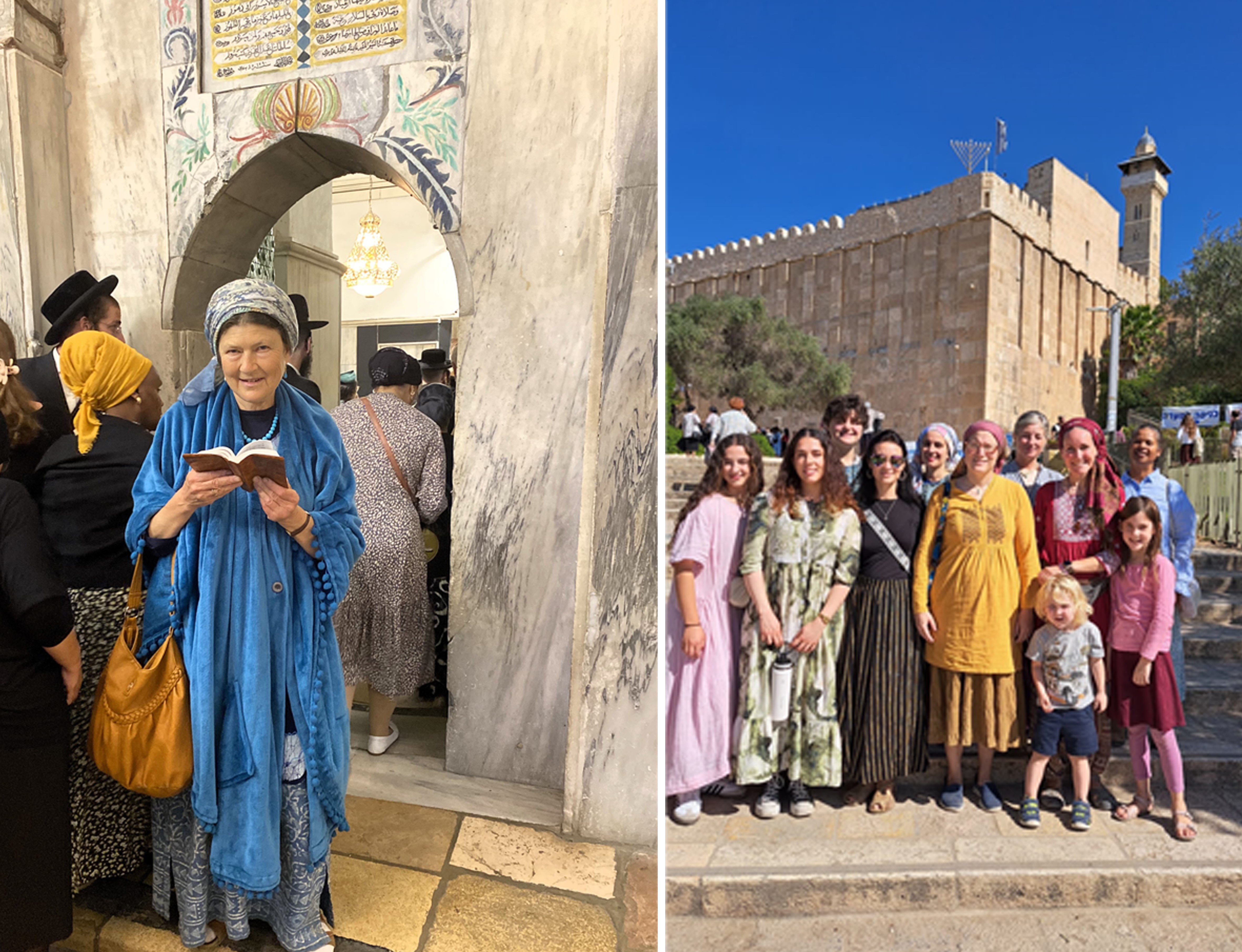
I’m very blessed to live in Bat Ayin, situated between the two
holiest cities in the world: Yerushalayim and Chevron! The two additional holy
cities Tiberias and Tzfat are also dear to my heart and soul. Although they are
further away, I try to visit them every year, swim in the Kineret, and pray at
the tombs of Tzaddikim buried in these cities. The term “four holy cities of Israel” was coined in the 16th
century when these cities connected for charitable purposes under the
leadership of Rabbi Moshe Alshich, together with Rabbi Yosef Caro, Rabbi Yitzchak
Luria, and Rabbi David ibn Zimra (Radbaz). I have not found the source for how
these four cities correspond to the four elements, Jerusalem – Fire, Chevron –
Earth, Tzefat – Air, and Tiberias – Water. In my experience, often the most
self-evident doesn’t have or require a source, everyone senses that these
cities are holy through their particular elements. Thus, we here in Bat Ayin live
in the vortex point between holy fire and the holy earth, and here you can feel
the red-brown earth element flowing from Chevron to merge with the red fire of Jerusalem.
Bat Ayin, is, furthermore called the Tzefat of Yerushalayim, due to the air of
the devoted Chassidim who live here and their intense prayer. Our numerous wellsprings also connect us with
Tiberias’ holiness through water. Needless to say, in our experience, the
zenith of the land of Israel is gathered here in Bat Ayin. This year, on our
annual school trip to the Machpelah Cave, we were fortunate to find the
Yitzchak Hall open. It is known that inside this Hall – which is only open to
Jews 10 days a year – is the opening to the Garden of Eden through which all
our prayers ascend. As I stepped into this enchanted hall, I felt transported beyond
the dimensions of time and space. As I bent down and felt the cool air from the
opening to the Garden of Eden, my prayers flowed like never before, as if my
soul was wrapped in prayer. What an incredible, powerful, experience!
Sarah Ensures Ownership of the Machpelah Cave
for Her Descendents
Sarah, our mother, was very well connected with the holiness of the
land. Therefore, she made sure to pass away specifically in Chevron so she
could be buried within the holiest earth in the world. The Eishet Chayil
that we sing Friday night upon returning home from the synagogue was originally
Avraham’s eulogy for Sarah. Later King Solomon recaptured it and included it at
the end of his Mishlei (Proverbs). This is what is written, “A woman of valor is the crown of her
husband” (Mishlei 12:4).
This is Avraham who would lament over Sarah as it stated, “She envisioned a field and took it”
(Mishlei 31:16) – She envisioned and
took the field of Machpelah and there she was buried as it states, “Afterward Avraham buried Sarah” (Bereishit 23:19); (Midrash
Tanchuma, Chayei Sarah, Chapter 4). Sarah, through her gevurah,
decided during her lifetime the location of her burial place in the holy cave
where Adam and Chava were buried. We can learn from her to devote ourselves to establishing
the holy places of Israel under Jewish autonomy. Avraham wouldn’t have had the
idea to request the Machpelah if Sarah had not established her place nearby throughout
the days of her last years. In Sarah’s merit, Avraham was able to redeem the
Machpelah for her, for the rest of the matriarchs and patriarchs, and for all their
descendants until this day. We need to renew to merit the Cave of Machpelah
through the power of Sarah. Let us keep visiting this holy cave and keep
praying the Hall of Yitzchak will be redeemed from the captivity of the
Ishmaelites and be returned to the descendant of Yitzchak, son of Sarah our
Matriarch!
How can the
nations defraud Israel by Saying that our Holy Places are Stolen Property?
Parashat Chayei Sarah opens with
Sarah’s passing and Avraham’s purchase of not only the Machpelah cave but also its
surrounding land as it states:
ספר בראשית פרק כג פסוק יז וַיָּקָם שְׂדֵה עֶפְרוֹן אֲשֶׁר בַּמַּכְפֵּלָה
אֲשֶׁר לִפְנֵי מַמְרֵא הַשָּׂדֶה וְהַמְּעָרָה אֲשֶׁר בּוֹ וְכָל הָעֵץ אֲשֶׁר
בַּשָּׂדֶה אֲשֶׁר בְּכָל גְּבֻלוֹ סָבִיב:יח) לְאַבְרָהָם לְמִקְנָה לְעֵינֵי בְנֵי חֵת בְּכֹל
בָּאֵי שַׁעַר עִירוֹ:
“And so, the field of Efron
which was in Machpelah, facing Mamre, was established (as Avraham's
possession). [This included] the field and the cave that was in it, and all the
trees that were in the field, which were within its entire border around. [It
was] to Avraham as a possession before the eyes of the sons of Chet, in the
presence of all who had come within the gate of his city” (Bereishit 23:17-18).
The description of Avraham’s purchase spans most of
chapter 23 in Bereishit (Verses 9-20), including numerous
repetitions. “The field” is mentioned 6 times, “give” is mentioned
4 times, “Machpelah” is mentioned 3 times, “Silver” 3
times, “before the eyes of the sons” 2 times, and “before the ears” 2 times. Moreover, both in verse 2 and in verse 19 it
mentions “The same is Chevron in the land of Canaan.” Emphasizing that
Chevron is part of the Land of Canaan and not Philistine land. These
redundancies clearly indicate Avraham’s purchase of the Machpelah cave
in the eyes and ears of those present, so no misunderstanding could ever occur
about the Machpelah belonging to Avraham. Yet, Chevron and its Machpelah
cave has been and still is one of the most disputed places in the world. It is
as if the Torah preempted that the Ishmaelites and other nations would try to
dispute Jewish sovereignty over this holy city. Thus, the Torah clarified in
black on white how Avraham purchased this whole area for his wife for posterity
for all of their descendants. The Midrash furthermore nails this point:
…Rabbi Yudan bar Simon said: This is one of the
three places that the nations of the world cannot defraud Israel and say, “This
is stolen property in your hands.” They are the Machpelah cave, the Beit
Hamikdash, and the tomb of Yosef [in Shechem]. The Machpelah cave, as it states: “Avraham listened to Efron,
and Avraham weighed out the silver for Efron” (Bereishit 23:16). The
Temple, as it states: “David gave to Ornan for the place 600 Shekel of gold by weight” (I Divrei Hayamim 21:25). The tomb of Yosef, as it states: “He bought the
part of the field where he had pitched his tent, at the hand of the sons of
Chamor, Shechem’s father for a hundred pieces of silver” (Bereishit
33:19); (Midrash Bereishit Rabbah 79:7). It is interesting
to note that these are the three most disputed places in Israel and perhaps in
the entire world.
The Eternal Connection Between the People of Israel
and Our Promised Land
When the Promised Land is redeemed, by its rightful
owner – the people of Israel, it becomes elevated as Rashi explains that
although the simple meaning of Beresishit 23:17 is that the field and the cave that
was within it, and all the trees…became secured to Avraham as a possession, etc.,
the literal meaning of וַיָּקָם שְׂדֵה
עֶפְרוֹן is that “the
field of Efron rose” – וַיָקָם/vayakam.
It experienced an elevation, for it left being the possession of a simple
person [and went] into the possession of a king (Midrash Bereishit Rabbah
48:8); (Rashi, Bereishit 23:17). We experience the application of this principle concerning
Gaza. When this area was under Jewish autonomy it was the thriving land of Gush
Katif with Israel’s most developed agriculture. Yet as soon as Israel left the
lands to the Ishmaelites, all the flourishing greenhouses and fields were
destroyed along with our synagogues and graveyards. The entire land turned into
breeding grounds for terrorism with tunnels for lethal arsenals of deadly
weapons, may Hashem save us. The holiness of the land of Israel must be activated
by her people. Only when the people of Israel live on its land and connect with
its holiness, does the land bear its holy fruit. The word Chevron is from the root ח-ב-ר –‘connect’ from which also the word ‘friend’ derives. Chevron is the connecting
point between this world and the Garden of Eden, as the Zohar explains:
Rabbi Kisma said The Machpelah
Cave is close to the opening of the Garden of Eden. When Chava died, Adam
buried her there. There he sensed the scents of the Garden of Eden. He wanted
to dig more, but a heavenly voice emerged and proclaimed: “Enough!” At that
moment he stopped and did not dig anymore, and there he was buried. Who took
care of his body? Shet, his son, who was
created in his likeness and image… [Since then] No one knew the cave until
Avraham came and entered it, saw it, and smelled the perfumed scent of the
Garden of Eden. He heard the voice of the ministering angels saying: “The first
man was buried there; Avraham, Yitzchak, and Ya’acov were prepared for this
place.” He saw the lit candle and went out. Immediately his desire was for this
place…Before Avraham came, many others desired to be buried there, but the
ministering angels would guard the place.
(Zohar Chadash, Midrash Ruth, Article When Hashem expelled
Adam from the Garden). So, you see that the exclusive right to the holy
Machpelah cave has already been established since Avraham’s time.
What is the Connection Between Chevron and
Yerushalayim?
Whereas the
Temple in Jerusalem is high upon a hill, revealed and open to all, Ma’arat
HaMachpelah is a cave that embodies the inner dimension, hidden from all eyes. The Beit
HaMikdash extends outward to the heavens – a masculine quality, while the
Cave of Machpelah extends inward, to the depths of the earth – the
feminine mother earth. Jerusalem bursts out, while Chevron is directed toward the
roots. Chevron is the preparation for Yerushalayim just like our
Patriarchs are the preparation for King David who conquered Yerushalayim.
Moreover, King David himself was first a king in Chevron for seven years before
he was crowned king over all of Israel in Yerushalayim. The root letters
of the word יִרְאָה /yirah – ‘awe’ are included
in the name יְרוּשָׁלַיִם/Yerushalayim, the city of awe.
It is a place of intense גְּבוּרָה/gevurah – ‘might,’ the trait of
Yitzchak. The near sacrifice of Yitzchak occurred in Jerusalem at the site of
Beit HaMikdash. In contrast, the humble cave of Machpelah is a place
that inspires אַהֲבָה – ‘love of G-d and חֶסֶד/chesed – ‘loving kindness’ the trait that characterized
Avraham. He even discovered the Cave of Machpelah while being engaged in the
hospitality of slaughtering calves to serve angels disguised as guests. The Zohar
asks, how did Avraham
enter the cave? He would run after the calf as it states “Avraham ran to the herd...” (Bereishit
18:7). The calf fled to this cave. Avraham entered after it into the cave and
saw what he saw. When he would pray daily, he would go out to this field, which
gave rise to celestial scents. Since he saw a light emanating from the cave, he
made it his place of prayer. In this place, G-d would speak with him.
Therefore, he desired the cave and yearned for it perpetually (Zohar,
Part 1 127b). The merit by
which Avraham earned discovery of Ma’arat HaMachpelah is likely due to
his desire and willingness to fulfill the positive precept of hachnasat
orchim (hosting guests), despite the exceedingly hot weather and the pain
he experienced on the third day after his Brit Milah. This reflects
Avraham’s primary trait of ‘Chesed’ – total, unrelenting
loving-kindness. All may view that which is revealed but
the revelation of the hidden is dependent on G-d’s Chesed – His
willingness to allow entrance into ‘the arena of the hidden.’ In other words,
Avraham’s discovery of Ma’arat HaMachpelah is an example of how Chesed
begets Chesed. Jerusalem and Chevron blend and unify. Torah – the
rules, the boundaries – the Tablets of the Ten Commandments are found
in Jerusalem. The Chesed, the full loving-kindness without
restriction, the trait of Avraham is in Chevron. The lights of Chevron and
the lights of Jerusalem merge to create a unity of spirituality that imbues the
Jewish people, the revealed and the hidden, this is the secret of Ma’arat
HaMachpelah, a unity which cannot be, and never will be, ‘disengaged.’