Tuesday, November 24, 2015

Dealing with Death

Life Lessons from the Rebbetzin’s Heart
Parashat Vayishlach
Living Every Day as the Last Day of our Life
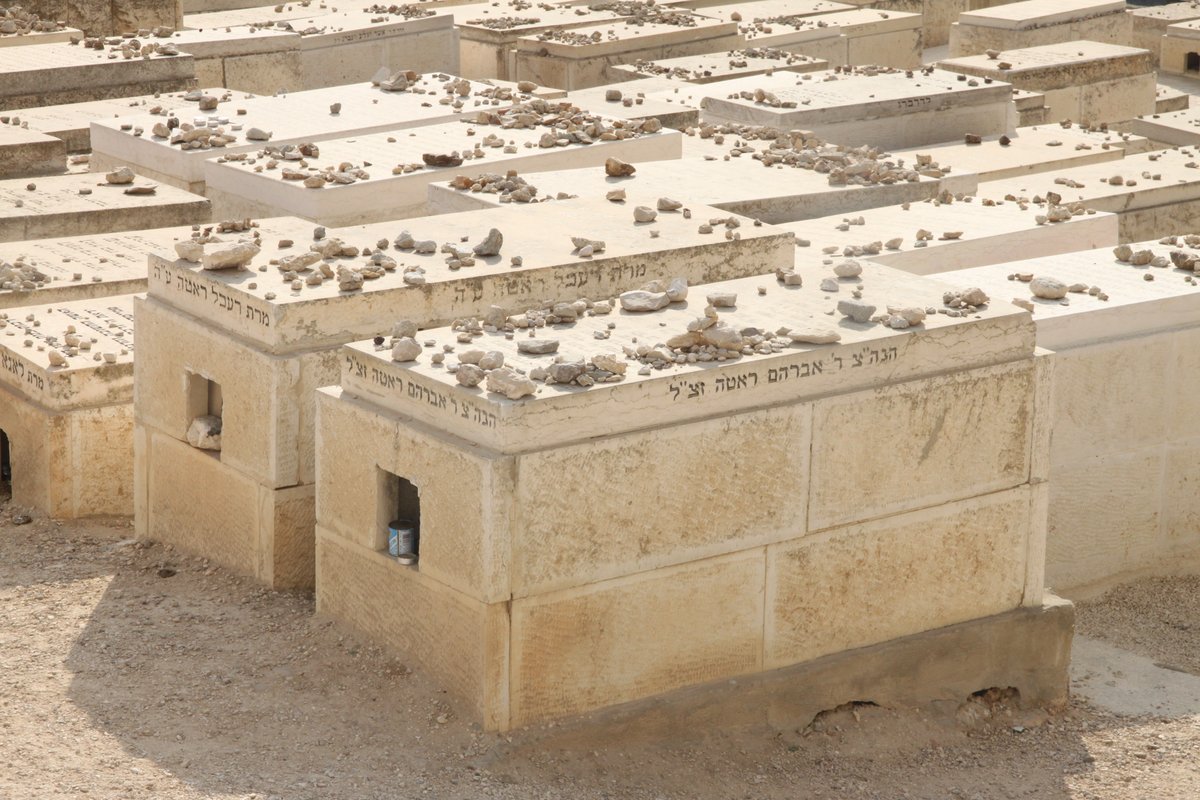
I have always been afraid of death. Since early childhood, it was hard for me to fall asleep, as I was afraid that I would never wake up. To this day, I cannot sleep with ticking clocks in the room. They remind me that our life clock is ticking away and that we have a finite amount of years in this world to accomplish an infinite amount of tasks. Lately, we have witnessed a lot of untimely deaths in the world and it’s hard to make sense of it all. Some people take tranquilizers; others lock their door with double locks, but life goes on, and part of life is death. As we grow older, death plays a greater role in our lives. When we lose friends and family members, we recognize that eventually we too will be called to face our own death. This awareness of our own inevitable death is a maturing experience. It forces us to think deeply about what is most important in life, and to put energy into meaningful endeavors.
ספר קהלת פרק ז (ב) טוֹב לָלֶכֶת אֶל בֵּית אֵבֶל מִלֶּכֶת אֶל בֵּית מִשְׁתֶּה בַּאֲשֶׁר הוּא סוֹף כָּל הָאָדָם וְהַחַי יִתֵּן אֶל לִבּוֹ:
“It is better to go to the house of mourning, than to go to the house of feasting; for that is the end of all men, and the living should take it to heart” (Kohelet 7:2).

Taking to heart “the end of all people” helps us do teshuva (repent) as it reminds us that one day we too will be held accountable for all our deeds in the heavenly court. All the tears I have cried for all the lost lives during funerals and shiva-calls lately ingrain within me the true value of life. Since life is short, we need to make the most of it by nurturing the loved people in our lives. It is not worthwhile to have expectations of others, which may cause us to experience disappointments. Rather we are put in this world to give and show love, no matter how others behave. In the face of death, we need to live to our fullest, living and let live every day, as if it was the last day in our life. How could we ever forgive ourselves for cutting off close relationships due to petty or even not so petty disagreements? What if one of us had to leave this world before we got a chance to reconcile?

Mourning our Losses
As our parents age, we realize that the opportunities to honor them are counted for, and that “if not now when?” (Pirkei Avot 1:14). Now is the time to put past arguments behind us while focusing on spending quality time and show appreciation for everything our parents have done for us all these years. This Chanukah it will be 12 years since my grandmother’s passing and I miss her love and compassion that she had in her heart for all of us. I remember when my grandmother was in her nineties feeling so lonely because all of her siblings and most of her friends had passed away. Sadly, she passed away when I was on one of my North America tours, and it was very traumatic to miss being with my grandmother in her last hours. Likewise, in this week’s parasha Ya’acov is informed of the death of his dear mother Rivkah with whom he did not experience closure.

ספר בראשית פרק לה (ח) וַתָּמָת דְּבֹרָה מֵינֶקֶת רִבְקָה וַתִּקָּבֵר מִתַּחַת לְבֵית אֵל תַּחַת הָאַלּוֹן וַיִּקְרָא שְׁמוֹ אַלּוֹן בָּכוּת:
“But Devorah, Rivkah’s nurse died, and she was buried beneath Beit El, under the oak, and he called the name Alon Bachut (Weeping Oak)” (Bereishit 35:8).

“Here he received news of another mourning, for he was informed that his mother had died” (Rashi). Ya’acov cried and mourned the loss of his righteous mother that he loved, who didn’t merit to see him on his return home after being away for 36 years. Therefore, Hashem revealed Himself to Ya’acov to console him (Ramban). Soon after the completion of this prophesy, Ya’acov suffered another very great loss. His dear beloved favorite wife died tragically in childbirth.

ספר בראשית פרק לה (יט) וַתָּמָת רָחֵל וַתִּקָּבֵר בְּדֶרֶךְ אֶפְרָתָה הִוא בֵּית לָחֶם:
“Then Rachel died, and was buried on the way to Efrat, which is Beit Lechem” (Bereishit 35:19)

Finally Ya’acov returns back home to his father in Chevron soon after which the Torah describes his death:

ספר בראשית פרק לה (כט) וַיִּגְוַע יִצְחָק וַיָּמָת וַיֵּאָסֶף אֶל עַמָּיו זָקֵן וּשְׂבַע יָמִים וַיִּקְבְּרוּ אֹתוֹ עֵשָׂו וְיַעֲקֹב בָּנָיו:
“Yitzchak then expired and died, and was gathered unto his people, being old and full of days and his sons Esau and Ya’acov buried him” (Bereishit 35:29).

How did Ya’acov recover from all his losses? How did he process all this mourning and continue to go about his life?

Life on Earth – A Prelude to a more Glorious Eternal Life
One of the most comforting concepts when it comes to death is the knowledge that death is not the final destination but only a release of the body and a rebirth of the soul. 

ספר קהלת פרק יב (ז) וְיָשֹׁב הֶעָפָר עַל הָאָרֶץ כְּשֶׁהָיָה וְהָרוּחַ תָּשׁוּב אֶל הָאֱלֹהִים אֲשֶׁר נְתָנָהּ:
“The dust returns to the earth as it was, and the spirit returns to G-d who gave it” (Kohelet 12:7).

Without the constraints of the body, our soul is liberated to bask in the light of the Divine splendor. Death is just a transcendence; it can be compared to changing our set of clothes, moving into a new home, or being born into this world. Rabbi Tucazinsky opens The Bridge of Life – Life as a Bridge between Past and Future with a parable about two twin brothers in their mother’s womb discussing whether there is life after gestation in the womb. One brother believes that the end of the time in the womb marks the end of their life, whereas his brother believes that they will be birthed into a new and freer life. He further explains that “just as the life of the embryo merely constitutes the transition to a broader and more exciting life – so, to an even greater extent is life on Earth merely the prelude to a more fascinating, glorious life which man, confined within his puny body and with limited perception, is incapable of conceiving.” Believing in the afterlife makes all the difference in how to live our current life. Hedonism is born out of a belief that this lifetime is all there is. In that case, there is no purpose in living other than getting the maximum enjoyment out of the here and now. The Talmud teaches otherwise: “Rabbi Ya’acov says, ‘This world is compared to an antechamber before the world to come. Prepare yourself in the antechamber in order to enter the banquet hall’” (Pirkei Avot 4:16). Just as we fix our dress collar, put on lipstick and smooth out any leaking mascara at the mirror in the hallway before entering the ball, so do we stand in front of our mirror in this world, where we need to check whether our deeds measure up to our potential. When we leave this world, we will be shown two movies. One movie shows the life we lived, the other the life we could have lived according to our potential. The experience of Hell is when there is a great discrepancy between these two movies. With this perspective in mind, it is easier to understand that all difficulties and suffering in life are tests to help us perfect our character and reach our ultimate perfection.

The Greatness of a Person is only Known at Death
When a person’s soul leaves the body, its greatness becomes known in the world. Recently, one of my neighbors died. Menashe ben Chaim had been confined to a wheelchair since he moved to Bat Ayin, perhaps seven years ago. I didn’t know much about him except that he was handicapped due to being injured in the Yom Kippur war. I didn’t think of him as a hero, in fact I didn’t think of him at all, as I was busy with my own life. When told about Menashe’s passing I decided to pay him his last respect by attending his funeral, since, after all, he was a neighbor. I expected a small funeral, and was surprised to see on the way to the graveyard that it was backed up with parked cars on every side. My realization of what a great person Menasha must have been was confirmed by the incredibly eulogies. Menashe had basically died from two bullets in his head but miraculously came back to life after being resuscitated by a close friend. This is when he changed his last name from Mizrachi to Ben Chaim. The injury wiped away his entire memory including the memory center connected to speech and it was only after a long retraining that Menashe was able to speak again, although by no means very fluently. Nevertheless, Menashe was invited to speak about his war-experience and amazing recovery at various schools and universities. Once at a girl’s high-school, one student raised her hand and asked, “How come you go and give speeches when you are unable to speak well? Aren’t you embarrassed?” The question has to be understood in relation to the girl who asked it. She obviously had a strong speech defect and stuttered all through her question. Menashe answered with such compassion and gentleness, “You and I are in good company, you and I are just as Moshe Rabbeinu who had a speech defect but that didn’t stop him from being our greatest teacher!” As the girl heard these words, she immediately straightened up on her chair with renewed self-confidence. Later, Menashe received letters of thank you from both the principal and the girl’s parents. Her newly gained self-confidence had done wonders for her ability to speak. During the last year of Menashe’s life, he was incapacitated to a great degree. In the end, when he no longer could eat, the only mitzvah Menashe was able to do was to praise Hashem when uttering a blessing over his drink. Yet, he performed this mitzvah with all his heart and just for this one mitzvah was it worthwhile for him to live. May we be inspired to live each day of our lives to its fullest extent through whatever mitzvah we can do before our time is up!

Thursday, November 19, 2015

Sister-Heart Protects the People of Israel

Life Lessons from Rebbetzin’s Heart - Parashat Vayetze
Sisters are Called to Bridge the Schisms of the World
In last week’s parasha we discussed the reconciliation between the two brothers, Ya’acov and Esav, whose hatred toward Ya’acov is eternal. This week highlights the even deeper relationship between the sisters Rachel and Leah. The foundation of the Jewish people is rooted in perfecting relationships between brothers and sisters. Parallel to the birth of the tribes of Israel, the Torah depicts the love and self-sacrifice between their mothers. Likewise, the rebirth of the tribes during the final redemption depends on rectifying our relationships and repairing the fragmentation of our people.

I thank Hashem for the most wonderful sister in the world, whom I deeply treasure. In some ways, I feel even closer to her than to my own husband. Since we grew up together as the branches of the same tree, we know each other so deeply. Over the years, we have been the greatest support for one another through thick and thin. We both admire and respect each other greatly and are able to mutually learn and grow from one another. My relationship with my sister is everything to me. I would move mountains for her and change myself 180 degrees. The relationship with my sister as two equals is especially important to me since in my role as mentor and teacher, most of my relationships are with women who come to me for help and guidance. Therefore, it is essential for me to have an equal relationship with my sister where we work things out even when we disagree. Like Rachel and Leah, my sister and I are in many ways opposite personalities who complement each other. Whereas I’m more of an outgoing leader type, the wisdom of my sister, which I hold in such great esteem, is more inwardly meditative and reflective. I have a favorite knitted sweater, which I call my Rachel-Leah sweater because half of it was knitted by my sister, and the other half by me. This sweater symbolizes for me the most rectified relationship of sisters enacted by Rachel and Leah who bridged the source of divisiveness in the world – the division between heaven and the earth, between the waters above and the waters below. Rachel and Leah affected each other to the greatest extent. Leah, who originally cried her eyes out in her inner world of prayer, became revealed in the world as the endeared wife of Yisrael and the happy mother of sons, whereas, Rachel the outgoing leader who originally embodied the physical external world, learned to cry internal tears from Leah. These heartfelt tears will ultimately return the exiles to the land, as it states, “Rachel cries for her children…they will return to their boundaries” (Yirmeyahu 31:14-16).

Women are Masters of Relationships
We women are masters of relationship. Connecting to others on the deepest level is most women’s highest aspiration, as sisters, wives and mothers. The spiritual energy created by true loving bonds generates spiritual unifications, which in turn reflect their light on the physical reality within our land. According to Arizal, everything that takes place in the world and especially in connection with the Land of Israel is a reflection of underlying spiritual relationships. Blessings come into the physical world as a result of unifications in the spiritual world. There are endless spiritual relationships interconnected with relationships we experience among ourselves. These relationships are both reflected on a national level within our people, on a personal level as mothers, daughters and sisters and within our marital relationship – a reflection of our relationship with the Divine. Redemption takes place in the merit of the righteous women who strive toward perfection in relationship. This explains how the Jewish women are praised for bringing about the redemption from Egypt. A deeper understanding of the underlying feminine spiritual forces connecting us to the Land of Israel will with Hashem’s help enable us to find our own place in the unfolding of redeeming the Land.

Allowing Your Sister to Change You
The opposing personalities of Rachel and Leah, and their incredible teamwork in overcoming the obstacles of jealousy and competition while each allowing her sister to ultimately change her, gives us the clue to repairing the spiritual root of the rift between the people of Israel and our land. Rachel and Leah in their soul-work and spiritual struggle, allowed themselves to be affected by one another and reverse their natural tendencies “He loved Rachel – the revealed world, but Leah was the hidden world” (Arizal, Sefer Etz Chaim 38:2). Both Rachel and Leah met each other in the middle ground halfway between hidden and revealed. We as women can tap into the tikun of Rachel and Leah in order to rebuild the land of Israel. The greater each partner in the relationship is able to change herself toward the other, the greater the relationship. If you are naturally outgoing, strong and opinionated while your sister is quiet and shy, in a rectified relationship you learn to tune down your own voice and become more reflective and understanding of your sister’s perspective. Likewise, she will learn from her outspoken sister how to articulate her feelings and express herself clearly.

Building the House of Israel through Rectified Relationship
The process of overcoming internal emotional struggle between Rachel and Leah was not easy. Rachel and Leah had very different and opposite natures from the very beginning. Rachel was outgoing, beautiful and strong. She was used to getting her way and having others cater to her needs. Leah was more introverted and eager to please. Through her difficult relationship with her sister Leah, Rachel was able to perfect her nature. In her love for her sister, Rachel overcame her own tendency of jealousy and handed over the secret signs she had with Ya’acov to Leah, thus sacrificing everything that clearly was coming to herself. (Metzudat David, Yirmeyahu 31:15). Rachel hadn't expected then this situation where she remained barren while her sister enjoyed motherhood and the stronger connection with Ya’acov through her children. This test was harder than she could bare, stretching her beyond the limit, and she succumbed to a tinge of jealousy. When Leah bares one child after the other to Ya’acov, Rachel is overcome by her old jealousy that she seemingly had conquered when she allowed Leah to become Ya’acov's wife (Bereishit 30:1). Rachel felt that she was on the brink of death unless she too would bear Ya’acov sons (ibid.). However, she was able to do a tikun to the extent that the went to the other extreme by not being jealous even at her maidservant. After being admonished by Ya’acov, she looked into herself and rectified her tinge of jealousy by giving Ya’acov her maidservant Bilha as a wife (Bereishit 30:3-4). The birth of Bilha’s second son Naftali completed this rectification process. This explains the rather obscure exclamation with which Rachel named Naftali.
בראשית ל:ח וַתֹּאמֶר רָחֵל נַפְתּוּלֵי אֱלֹהִים נִפְתַּלְתִּי עִם אֲחֹתִי גַּם יָכֹלְתִּי וַתִּקְרָא שְׁמוֹ נַפְתָּלִי:
“With great wrestlings have I wrestled with my sister and I have prevailed” (Bereishit 30:8).

The inner struggles that Rachel had gone through by means of her sister Leah ultimately refined her nature. All the difficulties she has experienced through her relationship with her sister thus serves the purpose of making Rachel overcome herself in order to reach perfection of character. The more difficulties we may have relating to another person, the more opportunity we have to grow specifically through this very relationship. It is this insight that prompted Rachel to call Bilha's second son Naftali – I became strengthened through my sister, like two people who wrestle and help each other thereby. Like a string that is made up of two strings, it becomes stronger when it is twisted. (Radak, Bereishit 30:8) Going through the process of overcoming the difficulties between them enabled the sisters to connect with holy connections (Rashbam, Bereishit 30:8). This spiritual work laid the foundation for the offspring of the two sisters to become one unified nation of Israel. As in the case of Rachel and Leah, the underlying problem between most sisters is some kind of deep-seated jealousy, which can only be overcome by profound self-awareness, deep emotional work, followed by rectified action. This is why, “it is impossible to build the house of Israel except through both Rachel and Leah”... (Arvei Nachal, Parashat Miketz based on Ruth 4:11).

Rectifying Relationships by Meeting in the Middle
“The feet of Leah ensconce (is clothed) within the crown of Rachel” (Etz Chayim, Sha’ar 38, Chapter 3). The complete building of the relationship with the Land of Israel is a relationship with both Leah and Rachel simultaneously – including both the hidden spiritual world and the revealed physical world. The spiritual relationship of hidden Torah and inner thoughts must unite with the physical relationship of working and building the land. Without going into the scope of the difficult topic of polygamy in the Torah, I want to venture to explain why Ya’acov, our father, was meant to marry the two sisters, Rachel and Leah. From all our holy fathers only Ya’acov retains two names. The reason for this is that Ya’acov corresponds to the sefirah of Tiferet, which has two aspects. The upper aspect of Tiferet corresponds to Yisrael, while the lower aspect to Ya’acov. Matching each of these aspects of himself, Ya’acov needed to marry both Rachel and Leah (Imrei Noam on the fifth day of Chanukah). Before Ya’acov became Yisrael he was unable to relate to Leah but connected with Rachel in the deepest way. After struggling with Esau’s arc angel and receiving the name of Yisrael he rose to the level of Leah. The relationship that needs the greatest work is always the holiest. Therefore, the rectified relationship between Yisrael and Rachel corresponds to the generation who enters the Land of Israel. The land is the embodiment of Rachel, and Israel is Yisrael (Arizal, Sefer HaLikutim, Parashat Beshalach 18). The only way Yisrael who stands on the top of the ladder would be able to connect with Rachel at the foundation of the ladder would be through her relationship with Leah whose feet touches the crown of Rachel. In order for the zivug of Yisrael and Rachel to be complete, Rachel must approach Yisrael by extending herself into the point where she and Leah was able to meet. Likewise, Yisrael must approach Rachel by extending himself into the point of his zivug with Leah where Leah meets Rachel. In this way, the unification of Yisrael and Rachel is the highest unification because it includes the sisterly relationship of Rachel and Leah within it.

Overcoming Spiritual and Physical Enemies in the Merit of Rachel and Leah
In these redemptive times, we lack neither physical nor spiritual enemies. Our spiritual enemies who want to strip us of our true belief and culture, by enticing us to exile and assimilation correspond to Leah, whereas our physical enemies who threaten our very lives correspond to Rachel. Moav, the antithesis to the Jewish people, includes both Bilam and Balak, and thus represents both kinds of enemies. בִּלְעָם/Bilam and בָּלָק/Balak together makes up the accumulative gematria (numerical value) of רָחֵל/Rachel and לֵאָה/Leah, which is 274 עדר/eder – flock (the flock of Israel). Rachel 238 + Leah 36= 274 Balak 132+ Bilam 142 = 274. This concept is alluded to in the following Torah verse,

ספר שמות פרק טו (טו) אָז נִבְהֲלוּ אַלּוּפֵי אֱדוֹם אֵילֵי מוֹאָב יֹאחֲזֵמוֹ רָעַד נָמֹגוּ כֹּל ישְׁבֵי כְנָעַן:
“Then the chiefs of Edom shall panic; the mighty men of Moav, trembling (רעד/ra’ad) shall take hold upon them; all the inhabitants of Canaan shall melt away” (Shemot 15:15).

Moav wages war with Israel both through the spiritual and physical weapons. This corresponds to the two kinds of service in Israel, the aspect of action – Rachel and the aspect of thought/speech. – Leah. Balak’s deeds was in physical warfare from the other side of Rachel. Whereas, Bilam wanted to curse Israel in thought, and speech, the other side of Leah. In Moav both Balak and Bilam joined together to stand against Israel. However, they were unable to prevail due to the eternal bonds of Rachel and Leah which preceded them. Because Balak and Bilam consist of the gematria of עדר/eder, their punishment is through letters trembling – רעד/ra’ad, with the exact same letters (Agra d’Kalah, 179b).

Expressing True Love in Relationships on All Levels
Through the rectified relationship between Rachel and Leah, none of our archenemies will be able to attack us as they each only have the ability to overcome us either physically or spiritually. When our Torah learning and spirituality is united with our physical mitzvot in the Land, then our spiritual enemy will be deterred by our physical strength, while our physical enemy by our spiritual shield. The foundation of shalom bayit (peace in the home) within the Jewish people as a whole, is reunification of the two main tenants of the bayit of Israel – the children of Rachel with the children of Leah. Redemption depends on repairing the schism within the Jewish people, rooted in the division between the sons of Rachel and Leah. The character building work of rectifying our relationship with our sisters has repercussion toward repairing the breach between the different factions of our people, between Ashkenazim and Sephardim, Chareidim, and “settlers,” religious and non-religious, Jews in Israel and in the Diaspora. We will be able to bring peace to Israel when we are able to perfect and express our relationship to others on the deepest level as sisters, wives and mothers. Any kind of relationship where we express pure love enacts rectification beyond boundaries. The spiritual energy created through this pure love generates spiritual unifications that elicit the Divine flow effecting shalom in our Land. Therefore, redemption will take place in the merit of the righteous women who overcome jealousy, indifference, anger, power-struggle and fear to express true love in relationship on all levels.

Tuesday, November 10, 2015

Can Sibling Rivalry be Repaired?

Life Lessons from the Rebbetzin’s Heart - Parashat Toldot
Our Siblings are the Branches in our Tree
Sibling rivalry is deeply rooted in the very first brothers of the world. As soon as a baby is able to scream and grab, he will attempt to seize a teddy bear from his brother or protest loudly when his brother takes away his soft ball. Last Shabbat, one of my granddaughters pushed her sister off her chair. Though she fell, hurt herself, and cried profusely, with the help of their mother, the sisters quickly became friends again. Both learned to apologize, one for pushing her sister off her chair and the other for taking her seat. Even as we grow up and learn to share, the underlying need to protect our own rights does not always abate, and in the process, great rifts between siblings may arise. Unlike children, who quickly forget, adults are not always able to get over the hurt they experience from their brother or sister. They could use a ‘mother’ to help them reconcile. I believe that it is one of the saddest things in the world when siblings don’t get along, and some even refuse to put effort or take a risk for the sake of saving their relationship. A human being is compared to a tree, the roots are our parents, the branches our siblings, and the fruits our offspring. Our tree can only flourish when all our family relationships are healthy. More than once, women have come to me for help because they do not get along with their sisters. Others came for different issues, and during the sessions, it turned out that they had accepted not being on speaking terms with their sister for many years. Some felt unable to work on these relationships as so many issues had piled up over the years that they had given up untangling the emotional mess.

Could it be Damaging to have an Open and Honest Talk with Your Sister?
I recall one woman in particular, let’s call her Aliza, who refused to go to a mediator with her elder sister, Tanya, as she felt it may be damaging for her personal development to find her own voice. Since childhood, Aliza had looked up to her big sister, and during adulthood, she had often gone along with Tanya and learned much from following her advice. One day, when a dispute arose between them, Aliza decided it was time to free herself from allowing her sister to dictate her opinions. When Tanya became extremely hurt, Aliza interpreted it to be the result of Tanya’s unwillingness to accept her right to assert her own views in life. I explained to her that Tanya’s hurt feelings might have been unrelated to Aliza having her own opinion, but a cause of Aliza’s avoidance of an open and honest discussion between them. “Perhaps your unwillingness to be open about your feelings toward your sister may cause the negative feelings to be expressed indirectly in even more hurtful ways.” Sometimes we may evade speaking our heart in order to avoid hurting people without realizing that these unspoken negative feelings leak out in other ways, especially to our loved ones, and cause more damage and hurt than mustering up the courage to be direct in our speech. Furthermore, perhaps the process of asserting her personal independence caused Aliza to close her heart to having compassion for her sister in fear that empathy for her sister’s feelings would cause her to be swayed into having to agree with her. It is not always easy to know how to show compassion by acknowledging verbally where the other person is coming from and empathizing with her pain without having to agree with her or be persuaded to apologize for things we didn’t do. Could it be that Aliza’s possible lack of empathy and compassion was hurtful to her sister? Perhaps this could be repaired through a reconciliation with a third person who could act as a buffer and create a safe space for Aliza to express herself by ensuring that Tanya would not bully her younger sister. Working things out with Tanya could possibly be an opportunity for Aliza to find her own voice and practice expressing her own emotions in a clear and direct way.

Ya’acov is Held Accountable for Lack of Brotherliness toward Esav
What can we learn from Parashat Toldot about repairing Tanya and Aliza’s relationship?
After 20 years of infertility, Rivka finally gives birth to twins. The boys were very different: “Esav became a cunning hunter, a man of the field, while Ya’acov became a sincere person dwelling in the Tents” (Bereishit 25:27). Rashi explains that אִישׁ יֹדֵעַ צַיִד –“a cunning hunter” implies that Esav would entrap and deceive his father, whereas אִישׁ תָּם – “a sincere, wholehearted or simple person” implies that Ya’cov would express what was in his heart with his mouth. Although Esav is evil and Ya’acov righteous, Ya’acov’s actions toward his brother don’t seem very brotherly. When “Esav comes home from the field faint [with hunger]” (Bereishit 25:29), Ya’acov takes advantage of his brother being so famished that he is unable to think about the future. As a condition for giving him a bowl of lentil soup, Ya’acov demands that Esav sell his birthright without explaining what this birthright consists of. Unaware of the connection between the birthright and his father’s blessing, Esav is overcome with pain when he finds out that Ya’acov has taken the blessing through deception.
ספר בראשית פרק כז פסוק לד 
כִּשְׁמֹעַ עֵשָׂו אֶת דִּבְרֵי אָבִיו וַיִּצְעַק צְעָקָה גְּדֹלָה וּמָרָה עַד מְאֹד, וַיֹּאמֶר לְאָבִיו בָּרֲכֵנִי גַם אָנִי אָבִי:
“When Esav heard the words of his father he cried out with a great (מְאֹד/meod) and exceedingly bitter cry and he said to his father, ‘Bless me also, O my father’” (Bereishit 27:34).

The Zohar explains that Esav’s scream, voice, and cry reach until a place called “very much” that is spelled with the letters מ-א-ד mem, aleph, dalet, which also spell Adam – א-ד-ם aleph, dalet, mem. It echoes the primal suffering of all humanity stuck in a seemingly vain and hopeless existence. Esav’s voice rises to one of the highest places where Adam, the progenitor of humanity, is created as a being separate from godliness and pure paradise, which in itself is terrible suffering. It includes the suffering of all humanity throughout the ages. Therefore, the heavens and earth and everything that is within them shake (Zohar, Parashat Mishpatim 111a). This pain that Ya’acov inflicted on his brother, although he was wicked cannot be swept under the carpet and forgotten, as the prophet writes, “Hashem has a quarrel with Yehuda, and He will remember about Ya’acov. He will repay him according to his deeds” (Hoshea 12:3). Although the birthright with its blessings surely did belong to Ya’acov, he is still liable for not treating Esav with brotherly love and compassion. Hashem does not forget how Ya’acov disregarded the prophetic principle, וּמִבְּשָׂרְךָ לֹא תִתְעַלָּם “…Do not hide from your kin” (Yesha’yahu 58:7), by refusing to feed his famished brother unless he sold to him his birthright. Ya’acov had to pay for this lack of brotherliness, through the strife between his sons, which led Yehuda and his brothers to sell Yosef as a slave in Egypt (Shabtai Teicher z”l, Sabba D’Mishpatim, The Old Man in the Sea).

Did Ya’acov Need to Apologize to Esav for the Pain He Caused Him?
Is it possible to repair the relationship if you feel your sibling has wronged you, and hours, days, weeks, and years go by with no communication between you, without the opportunity to tell him how hurt you were, and why you were hurt? Is it possible to make believe that everything is fine and maintain a superficial relationship without working things out? Even if on the surface, everyone is friendly again, how is it possible to avoid a loss of a certain trust without a heartfelt, open communication and a sincere request for forgiveness? Yet, how could Ya’acov risk his life to offer the murderer Esav such an opportunity for reconciliation? “Esav hated Ya’acov, because of the blessings which his father had given him…” and plotted to kill Ya’acov (Bereishit 27:41). In order to save his life Ya’acov had to flee and the brothers were separated for 36 years (Rashi, Bereishit 28:9). Ya’acov was naturally afraid to face his brother and, understandably, he would evade such a meeting of reconciliation with or without a mediator. Moreover, Ya’acov’s personality, which is more fearful than any other Biblical hero, made it even harder for him to face his murderous brother. (Note that the word ירא – fear is mentioned in the Torah in connection with Ya’acov about 14 times). Considering all these extenuating circumstances, it would seem that Ya’acov surely is exonerated from seeking reconciliation with the evil Esav, who has plotted to kill him for years. Then how would Esav ever be appeased?

Ya’acov Risks His Life to Seek Reconciliation with His Brother
Four wives and eleven sons later, on his way home from the house of Lavan, Ya’acov is gripped by fear and anxiety when Esav, accompanied by four hundred men, marches toward him (Bereishit 32:7-8). Nevertheless, despite his fear, he apparently remains steadfast in his intention to meet with Esav. Prepared to face his brother, Ya’acov sends an offering (mincha) to Esav (Bereishit 32:14-22). Ya’acov instructs his emissaries to explain the purpose of the gifts as follows:
ספר בראשית פרק לב פסוק כא 
וַאֲמַרְתֶּם גַּם הִנֵּה עַבְדְּךָ יַעֲקֹב אַחֲרֵינוּ כִּי אָמַר אֲכַפְּרָה פָנָיו בַּמִּנְחָה הַהֹלֶכֶת לְפָנָי וְאַחֲרֵי כֵן אֶרְאֶה פָנָיו אוּלַי יִשָּׂא פָנָי:
“Behold, your servant Ya’acov is behind us, for he said: I will cleanse his anger\face (אֲכַפְּרָה פָנָיו/achapera panav) with the offering (mincha) that goes before me, and afterwards I will see his face (פָנָיו/panav); perhaps he will accept me (יִשָּׂא פָנָי/yisa panai)” (Bereishit 32:21).

The combination of a mincha (offering) and the verb root כ-פ-ר – kaf-peh-reish, clearly refers to atonement. Rashi thus explains that Ya’acov comes to “remove [Esav’s] agitation.” Thus, it appears that Ya’acov seeks forgiveness. How else would Esav’s anger be purged? The continuation of Ya’acov’s statement further strengthens this point. Ya’acov states his desire that perhaps יִשָּׂא פָנָי/ yisa panai literally, that Esav will lift his face. The verb for lifting or raising נ-ש-א – nun-sin-aleph is often associated with forgiveness and relationship. For example, after Kayin’s mincha is rejected and his “face falls,” G-d informs him that if he is good, he will be “lifted up,” an apparent reference to his “fallen face”, and the possibility of divine forgiveness, acceptance, and relationship (Bereishit 4:5-7). In sending his mincha, Ya’acov wishes for exactly what Kayin failed to achieve with his mincha, namely, an elevation of his face by his master, a renewed relationship and reconciliation (Rav Chanoch Waxman, Parashat Vayislach, Yeshivat Har Etzion).

“Do not Hide from your Kin”
What can we learn from Ya’acov about appeasing the pain of our sibling? The fact that Ya’acov was willing to risk his life to face his brother Esav and go into effort in becoming reconciled with him through humble words of endearment and excessive atonement offerings teaches us the importance of being willing to go into risks for the sake of reaching reconciliation with our siblings. Although the birthright was rightfully Ya’acov’s, and as such, he had done nothing objectively wrong in obtaining it from Esav, he still needed to make amends through a face-to-face appeasement for having caused much pain to his brother. Note that the word “face” is mentioned three times in our Torah verse. Today, we often cause so much damage to our dear ones through easy telephone and email access. So many miscommunications occur via these indirect ways of communication, all of which can be saved through the effort of face-to-face communication. According to Rabbi Shimon Bar Yochai, despite the well-known spiritual law that Esav hates Ya’acov, at the moment of their face-to-face meeting, his compassion was aroused and he kissed Ya’acov with his full heart (Rashi, Bereishit 33:40). No matter how patronizing, intimidating, and manipulative your sister may be, could she be even half as wicked as Esav?” I asked Aliza, “Would any conceivable damage that could possibly issue from a face-to-face reconciliation between you and your sister in any way amount to a fraction of the damage caused by evading such an opportunity for appeasement?” I inquired. “How can you withhold from your sister the opportunity to speak her heart and hear you express yours?” Perhaps the answer to this question echoes the admonishment of the prophet, “…From your kin do not hide” (Yesha’yahu 58:7).

Tuesday, November 3, 2015

Is the Burial of the Matriarchs and the Patriarchs mainly a Muslim Holy Site?

Life Lessons from the Rebbetzin’s Heart - Parashat Chayei Sara
“The Absence of Truth – a Sign of Redemption
B'erot Trip to Ma'arat HaMachpala, Hevron
I know that you are concerned about how it feels to live in the heart of Israel at this time, as you are aware that we have lately experienced such a wave of violence. While the municipalities of Gush Etzion and other regions offer psychological help to those, who are very afraid, life here somehow goes on more or less in a normal fashion. Besides the fact that wild rabbits consumed B’erot’s entire veggie garden, our midrasha is still flourishing and new students keep coming. I personally don’t live with fear, but do take more precautions when travelling. Likewise, our students are more careful to use public transportation rather than hitchhiking.

Since this week is Parashat Chayei Sarah in which the Torah makes super clear how the Machpelah cave in Chevron was purchased by Avraham, the first Jew, I decided to write my own unpolitical take on the political situation in Israel today. We live in a time when the media is constantly pouring twisted and misconceived information into the world. This is actually a sign that the Redemption is near as one of the symptoms of the footsteps of Mashiach is that “truth will be lacking” (Babylonian Talmud, Sota 49b).
Recently UNESCO has approved a resolution recognized the Tomb of the Patriarchs in Chevron and Rachel’s Tomb in Bethlechem as Muslim holy sites, despite that none of these places are mentioned the Quran (http://www.westernjournalism.com/analysis-heres-what-the-bible-says-about-the-muslim-claims-to-holy-sites-in-the-land-of-israel/), whereas they have great significance in the Torah, Jewish history and tradition. (https://www.breakingisraelnews.com/51910/unesco-declares-rachels-tomb-cave-of-patriarchs-muslim-holy-sites-jerusalem/#Evq9osXUlAB8bUoT.97). UNESCO ‘s resolution does not concur with the statements of the Bible, accepted by most world religious. Neither do they reflect the teachings of the Muslim Quran. It may perhaps be surprising to some people that the Quran recognizes the Land of Israel as the heritage of the Jews and explains that, before the Last Judgment, Jews will return to dwell there. This prophecy has already been fulfilled (Shaykh Prof. Abdul Hadi Palazzi). Among the many statements in the Quran about the right of the Jews to the land of Israel we find the following: “And thereafter We [Allah] said to the Children of Israel: ‘Dwell securely in the Promised Land…’” (Quran 17:104). So why is it that many of those who follow the Quran today do everything they can to prevent Israel from dwelling “securely in the Promised Land?”

Why Don’t We Stand Up for Our Rights in Our Holy Sites?
We may find a partial answer to this question in the Quran itself. The Quran warns Israel against the consequences of turning our back to the Holy Land: “And [remember] when Moses said to his people: ‘O my people, call in remembrance the favour of God unto you, when he produced prophets among you, made you kings, and gave to you what He had not given to any other among the peoples. O my people, enter the Holy Land which God has assigned unto you, and turn not back ignominiously, for then will ye be overthrown, to your own ruin’” (Quran 5:20-21). If we lack desire, courage and self-sacrifice for the holy sites in the Promised Land, we make ourselves vulnerable to “our own ruin.” My husband told me that his study partner explained that the current wave of terrorism was elicited by Israel’s inability to stand up for our rights to the Temple Mount. When the terrorists desecrated out holiest site with their consecutive rioting last month around Rosh Hashana time, Israel had the opportunity to institute as a natural consequence the restriction of their access to our holy Temple Mount. In fear of world opinion Israel restrained herself and continues to put up with the Wakf’s abuse of their authority on the Temple mount. Although sovereignty of Judaism’s holiest site – where the First and Second Temples once stood – was reclaimed by Israel during the 1967 War, it granted Jordan’s Wakf authority over the Temple mount and entrusted it to oversee it in order to avert unrest. The recent Temple Mount riots clearly prove that the Wakf has forfeited this trust. Contrary to what UNESCO claims, it was Israel that took measures to defuse tensions at the site where Muslims enjoyed unlimited access until they indulged in violent riots and attacked Jews with stones and knives. To this day Jews are banned from praying on our holiest place. Many Jews including my own husband who have visited the Temple mount testify to how the Wakf search them for any prayer book, which they confiscate and even watch their lips to ensure they are not praying from their heart. Instead of standing up firmly for our right to pray on the holiest site in Judaism, we make ourselves weak and vulnerable to the terrorists when we continue to allow the Arabs to have authority over the Temple Mount in spite of their innumerable riots. This fear to go against world opinion and taking ruler-ship is perceived by the terrorist as a weakness that gives them the impetus to strengthen their violence against us.

Sarah, Our Mother, Ensured Eternal Jewish Ownership to Chevron
We women have the power to stop the terrorism and bring about world peace and redemption. Mustering up the courage to stand up for Israel and proclaiming the truth against all the false condemnations are redemptive acts that we women can take. I must admit that it even takes a bit of courage for me to write you this. I had to overcome my fear of any possible angry responses. We need to be willing to take risks when it comes to assuring the security of the Land of Israel. Way before the original conquest of Canaan in the times of Yehoshua, Sarah, our mother, understood deeply the importance of ensuring Jewish ownership to the holy sites in the Promised Land. This is why she chose to die at the right time in the right place, in order to ensure the holy city of Chevron as her burial place and an everlasting inheritance for her descendants.
ספר בראשית פרק כג ב) וַתָּמָת שָׂרָה בְּקִרְיַת אַרְבַּע הִוא חֶבְרוֹן בְּאֶרֶץ כְּנָעַן וַיָּבֹא אַבְרָהָם לִסְפֹּד לְשָׂרָה וְלִבְכֹּתָהּ:
“Sarah died in Kiriat Arba, now Chevron, in the Land of Canaan, and Avraham came to eulogize Sarah and bewail her” (Bereishit 23:2).

Where did Abraham come from, and why wasn’t he with Sarah in Chevron at her final moments? According to Rashi, Avraham had settled temporarily in Be’ersheva following the binding of Yitzchak. Ramban explains that both Avraham and Sarah lived in Be’ersheva, but Sarah had returned to Chevron on her own. It is possible that Sarah was motivated by the desire to leave the land of the Philistines, where there were many idol worshipers, for the holiness of the Land of Israel (Otzar Rishonim, 376). “…This is to explain that this righteous one [Sarah] died in Eretz Yisrael and was buried there, for the Chitites are from the families of Canaan (Ramban, Bereishit 19:19). In her love of the holy sites of Israel, Sarah relocated to Chevron, when she instinctively knew that she was about to die. She desired that Avraham would purchase the Machpelah as an eternal burial place for her offspring – the Jewish people. As a support for Sarah’s inherent connection with the holy land of Chevron we find a verse in the Eishet Chayil,

:ספר משלי פרק לא (טז) זָמְמָה שָׂדֶה וַתִּקָּחֵהוּ
“She envisioned a field and took it” (Mishley 31:16).

The Midrash explains this verse to refer to Sarah who envisioned the field of Machpeleh, which she took for a burial place (Midrash Tanchuma, Chayei Sarah chapter 4). The Machpelah cave is indeed called the field of Machpelah 10 times in our Torah portion. I believe that this implies that Avraham purchased much more than a burial cave for his wife Sarah. He purchased an entire field – a substantial piece of land, which in the future would become one of the major holy cities for Sarah’s descendants. “From then on the field became the inheritance as a burial place for him and his descendants. This section is mentioned to inform us of the value of the land of Israel beyond all the lands for the live and the dead, and moreover to establish the word of Hashem to Avraham to become his inheritance” (Ibn Ezra, Bereishit 23:19).

Purchasing the Field of the Machpelah in Chevron
There are several redundancies in the Torah description of Avraham’s purchase of “the field of the Machpelah cave,” which clearly come to emphasize that there should be no doubt that Avraham has rightfully purchased the field of the Machpelah in Chevron and paid its full price in the presence of the people of the land. I have underlined some of the redundancies in this excerpt. If you read the entire chapter in the Torah, you will find even more redundancies.

בראשית כ"ג (י) וְעֶפְרוֹן ישֵׁב בְּתוֹךְ בְּנֵי חֵת וַיַּעַן עֶפְרוֹן הַחִתִּי אֶת אַבְרָהָם בְּאָזְנֵי בְנֵי חֵת לְכֹל בָּאֵי שַׁעַר עִירוֹ לֵאמֹר:(יא) לֹא אֲדֹנִי שְׁמָעֵנִי הַשָּׂדֶה נָתַתִּי לָךְ וְהַמְּעָרָה אֲשֶׁר בּוֹ לְךָ נְתַתִּיהָ לְעֵינֵי בְנֵי עַמִּי נְתַתִּיהָ לָּךְ קְבֹר מֵתֶךָ:(יב) וַיִּשְׁתַּחוּ אַבְרָהָם לִפְנֵי עַם הָאָרֶץ: (יג) וַיְדַבֵּר אֶל עֶפְרוֹן בְּאָזְנֵי עַם הָאָרֶץ לֵאמֹר אַךְ אִם אַתָּה לוּ שְׁמָעֵנִי נָתַתִּי כֶּסֶף הַשָּׂדֶה קַח מִמֶּנִּי וְאֶקְבְּרָה אֶת מֵתִי שָׁמָּה: (יד) וַיַּעַן עֶפְרוֹן אֶת אַבְרָהָם לֵאמֹר לוֹ: (טו) אֲדֹנִי שְׁמָעֵנִי אֶרֶץ אַרְבַּע מֵאֹת שֶׁקֶל כֶּסֶף בֵּינִי וּבֵינְךָ מַה הִוא וְאֶת מֵתְךָ קְבֹר: (טז) וַיִּשְׁמַע אַבְרָהָם אֶל עֶפְרוֹן וַיִּשְׁקֹל אַבְרָהָם לְעֶפְרֹן אֶת הַכֶּסֶף אֲשֶׁר דִּבֶּר בְּאָזְנֵי בְנֵי חֵת אַרְבַּע מֵאוֹת שֶׁקֶל כֶּסֶף עֹבֵר לַסֹּחֵר: (יז) וַיָּקָם שְׂדֵה עֶפְרוֹן אֲשֶׁר בַּמַּכְפֵּלָה אֲשֶׁר לִפְנֵי מַמְרֵא הַשָּׂדֶה וְהַמְּעָרָה אֲשֶׁר בּוֹ וְכָל הָעֵץ אֲשֶׁר בַּשָּׂדֶה אֲשֶׁר בְּכָל גְּבֻלוֹ סָבִיב: (יח) לְאַבְרָהָם לְמִקְנָה לְעֵינֵי בְנֵי חֵת בְּכֹל בָּאֵי שַׁעַר עִירוֹ: (יט) וְאַחֲרֵי כֵן קָבַר אַבְרָהָם אֶת שָׂרָה אִשְׁתּוֹ אֶל מְעָרַת שְׂדֵה הַמַּכְפֵּלָה עַל פְּנֵי מַמְרֵא הִוא חֶבְרוֹן בְּאֶרֶץ כְּנָעַן: (כ) וַיָּקָם הַשָּׂדֶה וְהַמְּעָרָה אֲשֶׁר בּוֹ לְאַבְרָהָם לַאֲחֻזַּת קָבֶר מֵאֵת בְּנֵי חֵת:
“…Ephron the son of Hittite answered Avraham in the hearing of the Hittites, all who entered the gate of his town saying, ‘No my lord, hear me, I give you the field and I give you the cave that is in it. I give it to you in the presence of my people. Bury your dead.’ Then Avraham bowed down before the people of the land, and spoke to Ephron in the hearing of the people of the land saying, ‘If only you would hear me out! Let me pay the price of the land; accept it from me, that I may bury my dead there.’ hear me; I will give the price of the field; accept it from me, that I may bury my dead there.’ Ephron answered Abraham, ‘My lord, listen to me; a piece of land worth four hundred shekels of silver, what is that between you and me? Bury your dead,’ Avraham agreed with Ephron; and Avraham weighed out for Ephron the silver that he had named in the hearing of the Hittites, four hundred shekels of silver, according to the weights current among the merchants. So the field of Ephron in Machpelah, which was east of Mamre, the field and the cave which was therein and all the trees that were in the field, throughout its whole area, was made sure to Avraham as a possession in the presence of the Hittites, before all who went in at the gate of his city. After this, Avraham buried Sarah, his wife in the cave of the field of Machpelah east of Mamre (that is, Chevron) in the land of Canaan. The field and the cave that is therein were made sure unto Avraham for a property of a burying place by the Hittites” (Bereishit 23:10-20).

Just as there are four couples buried in the Machpelah: Adam & Chava, Avraham & Sarah, Yitzchak & Rivka, Ya’acov & Leah so it the purchase of the Machpelah mentioned four times, twice “before the eyes of the sons” and twice “before the ears.” Silver is mentioned three times, and both verse 2 and verse 19 it mentions “The same is Chevron in the land of Canaan.” Emphasizing that Chevron is part of the land of Canaan and not Philistine land. These and other redundancies clearly indicate that Avraham purchased the Machpelah cave with its surrounding land before the eyes and ears of those present, so no misunderstanding could ever occur about Chevron belonging to Avraham and Sarah’s descendants. In fact, the most disputed places, which the Arabs claim as their exclusive holy sites are actually the exact places that the Torah most explicitly describes as being legally purchased to maintain an everlasting Jewish inheritance.

The Torah’s Preemptive Foresight to Refute the False Claims to Jewish Holy Sites

מדרש רבה בראשית פרשה עט פסקה ז ויקן את חלקת השדה אשר נטה שם אהלו וגו' במאה קשיטה א"ר יודן בר סימון זה אחד משלשה מקומות שאין אומות העולם יכולין להונות את ישראל לומר גזולים הן בידכם ואלו הן מערת המכפלה ובית המקדש וקבורתו של יוסף מערת המכפלה דכתיב (בראשית כג) וישמע אברהם אל עפרון וישקול אברהם לעפרון בית המקדש דכתיב (ד"ה א כא) ויתן דוד לארנן במקום וגו' וקבורתו של יוסף (בראשית לג) ויקן את חלקת השדה יעקב קנה שכם:
…Rabbi Yuden son of Simon said: This is one of the three places in which the nations cannot affront Israel saying: “You have robbery in your hands.” These are they: The Cave of Machpelah, The Beith Hamikdash and the burial of Yosef [in Shechem]. The Machpelah Cave, as it states: “Avraham listened to Efron, and Avraham weighed out the silver for Efron.” (Bereishit 23:16). The Temple, as it states: “David gave to Ornan for the place 600 Shekel of gold by weight” (I Divrei Hayamim 21:25). The burial of Yosef, as it states: “He bought the piece of land on which he had spread his tent, at the hand of the sons of Chamor, Schem’s father for a hundred pieces of silver” (Bereishit 33:19), (Bereishit Rabbah 79:7).

The Torah clearly foresaw the current false claims over the holiest sites of the Promised Land, and therefore it preempted to clarify to Israel that we have an undisputed historical, religious and political right over these vortex points that infuse the entire Land of Israel with its inherent holiness. Therefore, we should not be afraid to claim this right. Yet, in spite of the fact that Israel legally liberated these holy sites in the Six Day War, Israel sadly still accept limited access to them. Today, Jews are barred from entering and praying at the main part of the Machpelah Cave except for ten days a year! Are the Muslims the only ones who have a right to pray at the entire Machpelah Cave and on the Temple mount? The Arabs living in Israel and their leaders clearly think so and act upon it. They don’t hesitate to use violence to prevent freedom of worship as guaranteed by Israeli law and deny Jews entry to their holy places. (http://www.westernjournalism.com/analysis-heres-what-the-bible-says-about-the-muslim-claims-to-holy-sites-in-the-land-of-israel/). If we truly learn our Torah lesson, muster up courage to stand up for our spiritual rights in our Promised Land and stop succumbing to the pressures of the world powers, b”H the terrorists will cease from our Land, and we will be able to live in security, rebuild our Holy Temple and engender everlasting world peace!

Wednesday, October 28, 2015

Why Doesn’t Anyone Laugh Anymore?

Life Lessons from Rebbetzin’s Heart - Parashat Vaera
Where Did all the Playfulness and Laughter Go?
I miss having a baby or a grandchild that’s a baby. My youngest granddaughter is already five! What is so delicious about babies that I miss? I believe it is their joyous, free unrestrained laughter. Especially when you make them laugh, then their contagious laughter makes you laugh with them. They will just laugh and laugh from that deep place of carefree unblocked simcha (happiness). I remember, as a little girl when my friends and I couldn’t stop laughing for no reason at all. This sometimes happened in school, especially when we had a substitute teacher. We would just look at each other and get a fit of unstoppable laughter. We would laugh so hard until our stomach hurt. How sad that today I cry so much more than I laugh. It seems like many of us adults have completely forgotten how to laugh. This is why several Rabbis allow us to hear music during the semi-mourning period between Pesach and Shavuot. Since we are in such a state of general unhappiness, music no longer bring us extra joy, it just helps lift us up from our extra sadness. Perhaps it is hard for us to laugh because we are too serious. We take upon ourselves the burdens of the world, rather than surrendering all control to Hashem. Yitzchak, who is born in this week’s parasha, completely surrendered all control to Hashem in his willingness to be sacrificed. We can surrender in smaller ways, by placing our burden on Hashem, and allowing Him to take charge. We would be so liberated and free while releasing much shoulder tension. Then we could laugh again like Yitzchak, whose name means, “He will laugh.” In Hebrew the word for laughing לִצחֹק/litzchok and for playingלְצַחֶק /l’tzachek share the same root. Often we are too serious and not enough playful. The Torah states that Yitzchak played with Rivkah, his wife (Bereishit 26:8). We need to bring playfulness and laughter into our relationships. What once used to be natural and spontaneous, now takes conscious effort. We may even consider inserting playtime into our busy schedules! My husband and I have a dancing date one evening a week in our dining room. Not only is this great cardiovascular exercise, dancing has brought so much joy into our relationship, I highly recommend it!

Why did Sarah Laugh?
When we lose the ability to laugh freely out of unbridled joy, unhealthy laughter leaks out and causes us to laugh in unrectified ways. A friend once told me that as a girl whenever she would tell her mother about some difficulties she had in school or with friends, her mother would laugh scornfully. Because of her inability to feel compassion, her mother reacted with a nervous laughter, since she was unable to deal with her daughter’s pain in an emotionally mature way. There are many kinds of unrectified laughter. People may laugh at others in a way of putting them down, or cynically in disbelief. Sarah, our Mother laughed when she was told the wonderful message that she would bear a son at the age of 90.
ספר בראשית פרק יח (יב)וַתִּצְחַק שָׂרָה בְּקִרְבָּהּ לֵאמֹר אַחֲרֵי בְלֹתִי הָיְתָה לִּי עֶדְנָה וַאדֹנִי זָקֵן: (יג)וַיֹּאמֶר יְהֹוָה אֶל אַבְרָהָם לָמָּה זֶּה צָחֲקָה שָׂרָה לֵאמֹר הַאַף אֻמְנָם אֵלֵד וַאֲנִי זָקַנְתִּי: 
“Sarah laughed within herself saying, now that I am withered, am I to have enjoyment – with my lord being so old?” (Bereishit 18:12-13).

Sarah is reprimanded for this laughter of slight disbelief by no other than Hashem Who asked, “Why did Sarah laugh saying, shall I in truth bear a child, old as I am? (Ibid. 13). Sarah’s laughter was a result of her tinge of lack of emuna. Understandably, it is difficult to believe in Hashem’s unlimited control and power of bringing about the greatest miracle that completely defies scientific reality. When Hashem told Avraham about the son Sarah would bear for him he also laughed, “Then Avraham fell upon his face and laughed, and said in his heart, Shall a child be born unto him that is a hundred years old? And shall Sarah, that is ninety years old, bear?” (Bereishit 17:17). Rashi compares to two kinds of laughter and explains, “Sarah’s laughter was mocking. We learn that Avraham believed and was happy, but Sarah didn’t believe and mocked, and therefore G-d criticized Sarah but didn’t criticize Avraham” (Rashi, Bereishit 17:17). Two types of laughter greeted the news about the birth of Yitzhak. The difference between them is that Avraham spoke in a general language stating how unusual it would be if a hundred-year-old man had a child. He didn’t put himself in the center, as did Sarah when she began by describing her own situation. From this difference, there is a hint to the different quality of their laughter. Avraham laughed at the absurdity that something should change from the usual way of the world, while Sarah laughed privately in disbelief that the nature of her own body would actually be altered. A support for this view can also be found in the different tense of their language. Avraham spoke in the future form, indicating, that the future might deviate from what has been the usual way until now, whereas Sarah spoke in the past tense emphasizing that the way it was is the way it will be, not accepting drastic changes from the past.

Rectifying Adam and Chava
How do we understand that Sarah, who took G-d’s will on faith and accepted every situation with equanimity, would have any lack of emuna? And why did she deny having laughed? First of all, according to Ramban, Sarah was never told about Hashem’s prior promise to Avraham that she would bear him a son (Bereishit 17:15-16), secondly, how could Sarah know that the angel dressed up as an Arab was a messenger of Hashem? Yet, at her level of righteousness and trust in G-d, she is still held accountable for not taking the blessing of the stranger as an encouraging sign of hope. When confronted about her laughter she realized that the message was from G-d. Therefore, she denied having laughed, as she would never have had a tinge of disbelief, had she known that it was a Divine promise. At her level of righteousness and trust in G-d, she is still held accountable for such a minor misdeed as laughing quietly to herself without anyone hearing it but Hashem. Avraham and Sarah together with the rest of our mothers and fathers were in the process of rectifying the sin of Adam and Chava. In my life-lessons on Bereishit I wrote how their major sin needing rectification was their failure to take responsibility for their actions. My friend Yedidah Goldstein once told me the following in the name of Rabbi Twersky: Avraham and Sarah worked as a team to learn taking responsibility for their actions. When Avraham confronted her, “You did laugh” (Bereishit 18:15), Sarah learned to take responsibility for even a matter as small as a minute, miniscule laughter of disbelief, which hardly ever existed. Avraham enabled her to reach this very high level of refined rectification of Adam and Chava’s sin.

Rectified Overflowing Blessed Laughter
Laughter is triggered by the surprise element of something completely unexpected. Rectified laughter indicates a belief in G-d’s unlimited power and ability to run the world, which is beyond anything expected, breaking through all the physical boundaries of the world. Eventually, Sarah expands her level of emuna when, despite all odds, she gives birth to a son:
ספר בראשית פרק כא (ו)וַתֹּאמֶר שָׂרָה צְחֹק עָשָׂה לִי אֱלֹהִים כָּל הַשֹּׁמֵעַ יִצֲחַק לִי: (ז)וַתֹּאמֶר מִי מִלֵּל לְאַבְרָהָם הֵינִיקָה בָנִים שָׂרָה כִּי יָלַדְתִּי בֵן לִזְקֻנָיו:
“Then Sarah said, ‘G-d made laughter me; anyone who hears will laugh with me.’ She said, ‘Who would believe that that Sarah suckles children for Avraham? I have given birth to a child in his old age!’” (Bereishit 21:6-7).

Here Sarah rectifies her tinge of disbelief expressed to herself in her private laughter. Now as she is cradling her baby in her bosom there is no doubt that her laughter is one of exuberant joyful happiness, the source of overwhelming blessing for all humanity. “At the time that Sarah gave birth, many barren women conceived, many deaf people began hearing, many blind people started seeing, many insane people became sane” (Midrash Bereishit Rabbah 53:8). Whereas, Sarah’s first laughter included an element of disbelief in G-d’s power to completely change reality, her laughter after having given birth is the rectified laughter of complete joy for the amazing miracle, which brings blessed repercussion to the world.

Health Benefits of Laughter and Mashiach
One of the healthiest things a person can do is laugh. Sometimes we can see that those who have the most developed sense of humor are those who have been through the most traumatic events in life. Laughter has a preserving quality to it: it helps us through our darkest moments. Even on a physical level, medical studies reveal that laughter is healthy: it produces endorphins, aids our digestion, and helps us recover more quickly from illness. There are three possible reactions that we can have when receiving information: 1. The “A-Ha” reaction to logical and compatible information. When two pieces of information come together to create a more complete picture it elicits an affirmative response, as when one says “A-Ha.” 2. The negative “Uh-Uh” response, which is a second and opposite reaction that occurs when we receive incompatible information. When the pieces of information don’t make sense together. 3. The “Ha-Ha” reaction is when incompatible information fits together briefly in an amusing way. This is when two or more bits of data make sense together, but only temporarily. For a moment, we catch a glimpse of a reality that delights us, but then dissipate. Such is the nature of laughter. It is elicited as the result of looking at things in a new and unexpected way. When Mashiach arrives, Yitzchak will stand up for the Jewish people (Babylonian Talmud, Shabbat 89:2), and herald the new dawn of consciousness, and he will herald it with laughter. It will be all-knowing laughter, the laughter of the one who knew all along that something good was awaiting for us at the end. “Then our mouths shall be filled with laughter” (Tehillim 126:2).

Tuesday, October 20, 2015

My Journey Back Home

Life Lessons from the Rebbetzin’s Heart - Parashat Lech Lecha

Our Stories of Return Paralleling Avraham’s Journey
Rebbetzin Chana Bracha with Chava who originally
brought her to Yiddishkeit 36 years ago
Lech Lecha is one of my favorite Torah portions as we all have our own lech lecha (go to yourself) stories and journeys. That’s why I have taught this parasha for many years in Midreshet B’erot Bat Ayin. Not only my students who come from various walks of life can identify with Avraham who was Divinely guided to leave his parent’s home, his birthplace and country journeying into an unknown future. I too have my own lech lecha story, which began in 1974 and brought me to Israel in 1980. For some its hard to imagine that I used to be a hippie – flower power girl, others can easily visualize it. My journey back home to my roots is similar to that of so many others by the destiny albeit not by its beginning-point. I’m pretty sure you can count the ba’aeli teshuva (returnees to Judaism) from Denmark on less than one hand. About 20 years ago, I wrote down my personal teshuva story and I thought it appropriate to share it with you at the time when we read about Avraham’s journey back home.

My Secret Comforter Since Early Childhood
“What made you return to Judaism?” you ask crowding around me on the sofa. As I look into your eager faces, you remind me of myself, when I first set out to explore the unknown world of my Jewish heritage. The truth is that, although I grew up in an assimilated secular home, I seem to have been born religious. My religiosity was not expressed through any conscious observance of Jewish laws or rituals; yet, as far back as I can recall, I remember praying to G-d every night. Even as a preschooler I folded my hands and spoke the following words to G-d before closing my eyes for the night: “Dear G-d, thank you very much for all the good things you have done for me, and please forgive me for all the bad things I have done. I promise I’ll try be better.” I never spoke to anyone about my simple prayer. Although I hardly ever heard the word G-d mentioned in my environment, it felt quite natural to address Him every night – my own secret comforter, who was always there for me.

To Live or not to Live as Jews
I was born in Denmark in 1960, and I grew up in a clean green suburb of Copenhagen. My grandfather had been a great Jewish scholar, who later became captivated by the secular “enlightenment.” After having traveled the world, he settled in Denmark where he married and raised three children. Soon after their oldest daughter was married and I was born, my grandparents immigrated to Israel with their two younger children. Lacking any significant background in Judaism, my parents sent all their children to the Jewish school, hoping that in this way we would gain enough exposure to Judaism to choose for ourselves whether or not we wanted to live as Jews. However, the Jewish school was not very Jewish. We made fun of the few kids who dared to wear a skullcap to school. The weekly hour of religious instruction was our time to have fun at the teacher’s expense.

My Secular Upbringing – a Never-Ending Merry-Go-Round
As I entered seventh grade, I began to question all the values of the society in which I had been raised. The Judaism to which I had been exposed seemed like an empty, hypocritical religion. People who called themselves religious would drive to the synagogue on Shabbat, and park the car a few minutes’ walk away to pretend they had walked the entire distance. Of course, no one believed they had actually walked the 25 kilometers from their green suburb to the synagogue located in the heart of Copenhagen. Only the elderly came to synagogue to pray, while the vast majority came to socialize and to show off their newest outfit. My parents never set their foot in the synagogue, except for Simchat Torah when the synagogue was packed with ‘worshippers’ who eagerly came to exchange sweets and candies. I respected my parents for at least being consistent in their non-belief. Yet, it seemed to me that their lives seemed filled with emptiness. Material comforts were the focus of all their endeavors. The son of Russian immigrant shoemakers, my father regarded it a major accomplishment to have worked himself up to become a doctor. He had decided that his children would never lack anything. Little did he know that although we had everything which money could buy, we still felt spiritually deprived. I started wondering about the purpose of life. My parents’ lifestyle seemed meaningless to me. They believed that the most important thing was to get a good education, work hard, make a lot of money, get married, have children, give them a good education and so on. This struck me as a never-ending merry-go-round. Everything was for the sake of something else; nothing had a purpose in itself.

The Empty Space in My Soul Yearning for Meaning
I knew that I had been created for something more than getting a good education, so I embarked upon my spiritual journey, searching for meaning in life. I found no shortage of people who were eager to satisfy my thirst. My spiritual starvation must have been written in my clear blue eyes. As I strolled through the busy streets of Copenhagen, people from all sects and religions approached me with their pamphlets and invitations. I recall reading some of those pamphlets in my religious instruction hour at the Jewish school. I had become a real provocation. Perhaps I was secretly hoping that the teacher would notice the literature I had smuggled in and use the opportunity to explain the various concepts in a Jewish light. I felt utterly alone and without direction, susceptible to anyone who approached me. I danced in the streets with the Children of G-d, ecstatic at the idea of opening up my heart and being at one with my Creator. Yet, whenever Jesus was mentioned, my heart froze. I had no room in my heart for a human being whom others claimed was the son of G-d. I argued, and asked all kinds of questions which the “born again” Christians were unable to answer. It was as though they had been programmed to mouth their pat replies. They far from filled the empty space in my soul, which was yearning for purpose and meaning.

Experimenting with Expanded Consciousness
By the time I enrolled in high school, I had become a real hippie, draped in flowing Indian tunics and wearing flowers in my hair. In school, I insisted on sitting on my little rug on the floor. The basement of my parents’ villa, that had become my teenage den, was the gathering place for my circle of friends all of whom were experimenting with expansion of consciousness. We read Herman Hesse, Aldous Huxley, and Castaneda and listened to Pink Floyd and the Beatles’ Lucy in the Sky with Diamonds. We tried to relate to each other by every conceivable means, dancing around wildly, giving one another massages, using nonverbal communication, and breaking into spontaneous drama. There was no social norm, which we didn’t try to break. We idolized the American Indians and other exotic peoples, whose cultures seemed so much richer. Western culture was so inhibited! Why did it arbitrarily exclude alternative kinds of behavior or relationships? Reasoning that man-made laws were transient, with no intrinsic value, I questioned everything in the establishment including heterosexuality and the sanctity of marriage.

Experiencing the Entire World on One Side and I on The Other
Although not politically inclined, I was introduced to Marxism on my high school campus. I found myself involved with a group of people who were trying to change the world through demonstrations and street theater. However, the Marxist soon struck me as also being far too materialistic. Furthermore, their idealism seemed to be misplaced. They were avoiding having to develop their own characters by claiming to be working on changing the world. My mother’s words must have made an impression upon me after all. She used to say; “If you kids would only learn to get along, perhaps there would be peace in the world.” I realized, and deep down, had probably always known that in order to change the world one must first change oneself. I turned to yoga and meditation to get in touch with my inner self. This of course was going to the other extreme. The Yogis were concerned only about their own inner experiences without being involved in the world. Such a frame of mind was too alienating for me, too detached from daily reality. My next involvement was with the Green-peace movement. I went on midnight hikes, and enjoyed listening to the nightingale. When I turned eighteen, I refused to learn how to drive, because driving would be inconsistent with the buttons I was wearing, which proclaimed “Cars out of the City.” I fought against pollution and for the preservation of wildlife. Yet, I was still restless. My sensation of a spiritual vacuum seemed to be growing to the point where it threatened to consume me. I became paranoid and depressed. I felt so alone as if the whole world were on one side and I on the other. I was later to learn that this is the meaning of the title הָעִבְרִי/Ha’Ivri – the Hebrew, given to Avraham (Bereishit 14:13). because “Avraham distinguished himself from all the people of his environment as if the entire world was on one side and he on the other” (Midrash Bereishit Rabbah 42:8).

On My Way to the Promised Land
After graduating high school, I managed to earn enough money to travel the world. Barely nineteen I set out on my own, with a backpack and an outstretched thumb, leaving dear old Denmark behind. Perhaps it was because Denmark was such a flat country that its people were also flat without any spiritual height. My parents’ great horror that I was travelling this way on my own, had no power to stop me. I was determined to try everything in my quest for truth. Many questions were still burning within me: “Who created the world? What is the purpose of Creation? And what is my particular function within this world?” I soon realized that hitchhiking alone through Europe is not the safest way for a young girl to travel. Only when other Jews crossed my path did I feel secure. I could always identify a Jewish face. There was something different about the eyes, a depth, which I could only share with other Jews. I began to wonder whether having been born Jewish was supposed to make a difference in my life. Soon, I had acquired the habit of seeking refuge in the Jewish communities. There, I was invariably invited in for a meal and treated with respect. Travelling had in fact, started to wear me out. I had run out of money and courage. Despondent, a stranger in a strange land, I phoned home from Paris. Despite all our previous difficulties, this time my parents were enormously helpful. They offered to wire me a ticket to Israel, where I had relatives. There I wouldn’t be among strangers. I would be safe and have the option to join a Kibbutz or perhaps, a study program for overseas students. I accepted this offer without the slightest hesitation. The next day I was on my way to the Promised Land.

Tea with Chava – My New Friend from the Yeshiva
Any tourist visiting Israel ends up sooner or later at the Western Wall. I just stood there, in awe of the sense of sanctity that pervaded the place, without a word of prayer crystallizing on my lips. The intense light reflected by the ancient stones penetrated into the empty space in my very heart and soul. As I entered the square in front of the Wall a bearded man approached me. We soon began talking comfortably about everything and nothing. I enjoyed the feeling of being among Jews. Everyone around me seemed like family. A little while after, a girl named Chava a few years older than I, joined our conversation. She asked the man whether he had told me about their school. “The school? What school?” I heard myself ask in wonder. Chava invited me for tea in her room in the Old City. She told me about the Yeshiva where, for the past two years she had been learning what it meant to be a Jew. “Our heritage has so much to offer,” she said, that it was a lifetime study. Chava sparkled with intelligence and humor, and I instantly felt very close to her. I asked her all the questions with which I had challenged the members of various religions and sects. Unlike my experience in the past, Chava was able to answer my questions. Her answers not only made sense intellectually, but also touched a chord of recognition within me that resonated emotionally. One of my first questions concerned woman’s role within Judaism: “weren’t women treated like second-rate citizens?” “A woman is the queen in her home, which she makes into a miniature sanctuary.” Chava explained. I had yet to experience this myself in a way that no words can describe. I was prepared to admit that Western culture had brainwashed us into looking at the world through blinders. Title and career should not determine a person’s value. It is the deeds that counts, and not whether the person can occupy the spotlight. “But, don’t all the laws and regulations limit one’s personal freedom?” I persisted; certain that ‘freedom’ to express oneself fully was the highest value in life. Judaism seemed to be one big doctrine of limitations. Don’t mix milk and meat; don’t drive on the Sabbath; don’t dress immodestly; don’t marry a non-Jew and so on. How was it possible to keep all these rules without suffocating? Chava patiently taught me a different way of viewing the concept of freedom. “Real freedom,” she explained “is being true to one’s inner self.” If Jewish law seems to limit our personal freedom, we need to understand the essence of freedom in a deeper way. Someone who does whatever he feels like is not necessarily free. He may be a slave to other people’s opinions, his taste dictated by fashion. He might be enslaved to his own instincts and materialistic desires, without even realizing the power they exert over him. He may eat whatever he feels like but be unable to control his impulses and appetite. G-d gave us the commandments to help us actualize our inner potential through their performance, so that we reach the state of self-control that is the highest form of freedom. I left Chava’s room elated. I had found a friend, someone who shared my quest for truth. I was no longer all alone.

Awakened to the Truth I had Always Known
Learning to Live Judaism with All its Vibrancy

I received Chava’s invitation to return for Sabbath with excited expectation. Perhaps there was more to Judaism than the empty rituals, which I had encountered in Denmark. I was determined to give my own religion a chance. The following days proved extremely difficult for me. Many contradictory thoughts razed through my mind. Could I really take upon myself all of Judaism’s laws without feeling horribly constrained? Could I truly relate to this new view of freedom? Would I be able to change my life so profoundly? Yet, whenever I recalled Chava’s words, I felt strengthened, and awakened to something that I had somehow always known. Friday afternoon arrived and Chava introduced me to her friends in the dormitory. A French girl who was braiding the long glittering black hair of her Israeli roommate kissed me warmly on both cheeks. The Israeli girl then took out her guitar and started to play. Sara, from Germany, and Lea, from Holland joined us shortly afterward. Like me, they all wore colorful skirts and flowing tunics. All had stories of a spiritual journey similar to my own. We sang together, and danced in a circle. Here, in the heart of Jerusalem, we had reclaimed our roots. Our yearning – theirs and mine – had finally come to fruition. We were fulfilling our spiritual thirst by learning to live Judaism in all its vibrancy.

Coming Home to A Truth to which I Belonged
I was led to a room were two silver candlesticks awaited me. Chava taught me to say the blessing, and I lit the candles. As I gazed at the lights of the Sabbath candles, the world was transformed. The room was aglow with holiness and serenity, as though we had entered a higher realm of existence. It struck me that here was the expanded consciousness for which I had been searching all along. I had never expected to find it within my own tradition. Here, I was no longer a stranger exploring other people and places. I saw truth very clearly for the first time, and it was a truth, to which I belonged. I would keep learning and exploring together with others like myself. I had finally come home.